
中国水稻科学 ›› 2026, Vol. 40 ›› Issue (2): 223-234.DOI: 10.16819/j.1001-7216.2026.241109
郭金梦1, 陶开亮1, 朱俊1, 赵学宇1, 李康2, 甘泉2, 林翠香2, 汪楠胜2, 于豪2, 宋丰顺2, 李娟2, 石英尧1,*( ), 倪大虎2,*()
收稿日期:2024-11-15
修回日期:2025-01-19
出版日期:2026-03-10
发布日期:2026-03-16
通讯作者:
* email:Shiyy123@163.com; dahuni1974@163.com基金资助:
GUO Jinmeng1, TAO Kailiang1, ZHU Jun1, ZHAO Xueyu1, LI Kang2, GAN Quan2, LIN Cuixiang2, WANG Nansheng2, YU Hao2, SONG Fengshun2, LI Juan2, SHI Yingyao1,*(), NI Dahu2,*()
Received:2024-11-15
Revised:2025-01-19
Online:2026-03-10
Published:2026-03-16
Contact:
* email: Shiyy123@163.com; dahuni1974@163.com摘要:
【目的】创制抗除草剂水稻新种质是培育抗除草剂水稻新品种的前提。利用 CRISPR/Cas9 基因编辑技术,以安9S不育系为材料,编辑乙酰辅酶A羧化酶OsACC1基因,创制具有抗除草剂特性的两系不育系水稻新种质。【方法】利用CRISPR/Cas9技术,以乙酰辅酶A羧化酶OsACC1为靶基因,构建单碱基突变载体ePE2-ACC-I1879V,以安9S为转化材料,利用农杆菌介导法转化获得转基因植株,通过对转基因植株的突变位点进行测序结合除草剂喷施试验、农艺性状分析,鉴定基因型及表型。【结果】经分子水平检测验证,T0代获得 ACC1I1879V突变植株24株;经分离筛选,T1代24个株系共获得96株纯合突变单株,均具有除草剂抗性。高通量测序结果显示,三个试验组株系(NS512、NS513、NS514)均不含外源转基因成分,且喷施4%甲禾灵存活率仍达到100%。与对照安9S相比,NS512株系株高增加,剑叶变宽;NS513株系株高增高,剑叶变长变宽;NS514株系剑叶变窄;三个试验组株系的育性未发生改变,单株有效穗数、穗长、均没有显著差异。转基因安全性评价分析表明,OsACC1基因编码蛋白与已知毒蛋白、抗营养因子及过敏原均无相似序列,不存在毒性、致敏性问题。【结论】利用CRISPR/Cas9 基因编辑技术,能够获得具有抗ACCase抑制剂类除草剂特性、稳定遗传、不含转基因成分、育性不发生改变、安全无害的纯合株系,可为水稻抗除草剂育种提供材料基础。
郭金梦, 陶开亮, 朱俊, 赵学宇, 李康, 甘泉, 林翠香, 汪楠胜, 于豪, 宋丰顺, 李娟, 石英尧, 倪大虎. 水稻抗ACCase抑制剂类除草剂两系不育系种质资源的创制[J]. 中国水稻科学, 2026, 40(2): 223-234.
GUO Jinmeng, TAO Kailiang, ZHU Jun, ZHAO Xueyu, LI Kang, GAN Quan, LIN Cuixiang, WANG Nansheng, YU Hao, SONG Fengshun, LI Juan, SHI Yingyao, NI Dahu. Creation of Germplasm Resources of Two-line Sterile Rice Resistant to ACCase-inhibiting Herbicides[J]. Chinese Journal OF Rice Science, 2026, 40(2): 223-234.

图1 OsACC1在第34外显子上的靶位点
Fig. 1. Target site of OsACC1 on exon 34
| 引物名称 Primer name | 正向引物 Forward primer (5’-3’) | 反向引物 Reverse primer (5’-3’) |
|---|---|---|
| ACC-1 | GGACCTTGAAGATGTCCACTCC | GCAGGAACATAACTGAGCCACC |
| T-1 | GATATACTTGGATGATGGCA | GAGCCTGTGGAAGAAGCTG |
| T-2 | TAGACATGCAATGCTCATTATC | ACAGGTAAGAGCTAAGCATC |
| T-3 | GAATTCTGCAGGTCACTGGATT | TGACCCACTACCAGGCCCTG |
| T-4 | CGCCACCCTCATCCACCAGTCT | CTCCTGAGACATTGGGTACTGC |
| HITOM | ggagtgagtacggtgtgcCTGTCATAGCACATAAGATGCA | gagttggatgctggatggTCCAACAGTTCTTCCAGTCACA |
表1 本研究中所用的引物
Table 1. Primers used in this study
| 引物名称 Primer name | 正向引物 Forward primer (5’-3’) | 反向引物 Reverse primer (5’-3’) |
|---|---|---|
| ACC-1 | GGACCTTGAAGATGTCCACTCC | GCAGGAACATAACTGAGCCACC |
| T-1 | GATATACTTGGATGATGGCA | GAGCCTGTGGAAGAAGCTG |
| T-2 | TAGACATGCAATGCTCATTATC | ACAGGTAAGAGCTAAGCATC |
| T-3 | GAATTCTGCAGGTCACTGGATT | TGACCCACTACCAGGCCCTG |
| T-4 | CGCCACCCTCATCCACCAGTCT | CTCCTGAGACATTGGGTACTGC |
| HITOM | ggagtgagtacggtgtgcCTGTCATAGCACATAAGATGCA | gagttggatgctggatggTCCAACAGTTCTTCCAGTCACA |
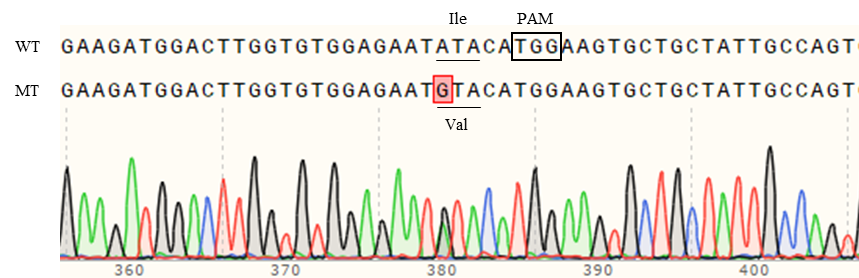
图2 T0代转基因植株(部分)测序结果
Fig. 2. Sequencing results of T0 transgenic plants (partial)

图3 T1代T-DNA分离(部分)检测结果 M: 标记;1~22: T1代单株;23: 阳性对照;24: 阴性对照。
Fig. 3. T-DNA isolation (partial) test results of T1 generation M, Marker;Lanes 1-22, T1 plants; Lane 23, Positive control; Lane 24, Negative control.
| 甲禾灵浓度1) Concentrations of haloxyfop-P-methyl1) | 对照组存活率 Survival rate of control group | 试验组存活率 Survival rate of experimental group | |||
|---|---|---|---|---|---|
| 安9S An 9S | NS512 | NS513 | NS514 | ||
| 0 | 100.0 | 100.0 | 100.0 | 100.0 | |
| 2 | 0 | 100.0 | 100.0 | 100.0 | |
| 4 | 0 | 100.0 | 100.0 | 100.0 | |
| 6 | 0 | 91.6 | 75.0 | 79.2 | |
| 8 | 0 | 66.7 | 87.5 | 91.6 | |
| 10 | 0 | 33.3 | 25.0 | 79.2 | |
表2 喷施不同浓度甲禾灵后的存活率
Table 2. Survival rate after spraying different concentrations of haloxyfop-P-methyl %
| 甲禾灵浓度1) Concentrations of haloxyfop-P-methyl1) | 对照组存活率 Survival rate of control group | 试验组存活率 Survival rate of experimental group | |||
|---|---|---|---|---|---|
| 安9S An 9S | NS512 | NS513 | NS514 | ||
| 0 | 100.0 | 100.0 | 100.0 | 100.0 | |
| 2 | 0 | 100.0 | 100.0 | 100.0 | |
| 4 | 0 | 100.0 | 100.0 | 100.0 | |
| 6 | 0 | 91.6 | 75.0 | 79.2 | |
| 8 | 0 | 66.7 | 87.5 | 91.6 | |
| 10 | 0 | 33.3 | 25.0 | 79.2 | |

图4 对照组和试验组NS514经不同浓度甲禾灵处理后对比图(田间)
Fig. 4. Comparison of control group and experimental group NS514 treated with different concentrations of haloxyfop-P-methyl (field)
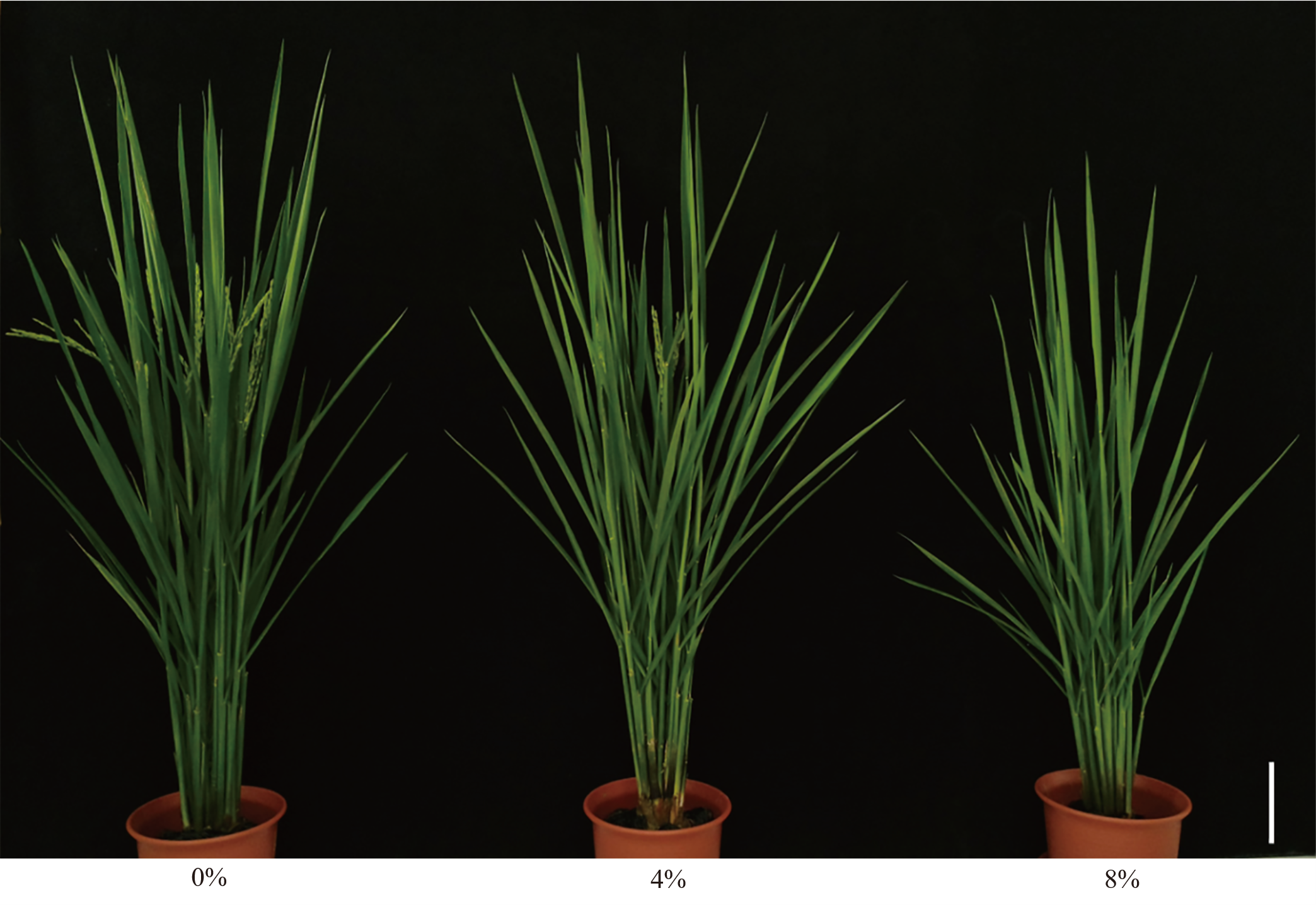
图5 NS514在0%、4%、8%甲禾灵处理下的生长状况(标尺=10 cm)
Fig. 5. Growth of NS514 under 0%, 4% and 8% haloxyfop-P-methyl treatments (bar=10 cm)
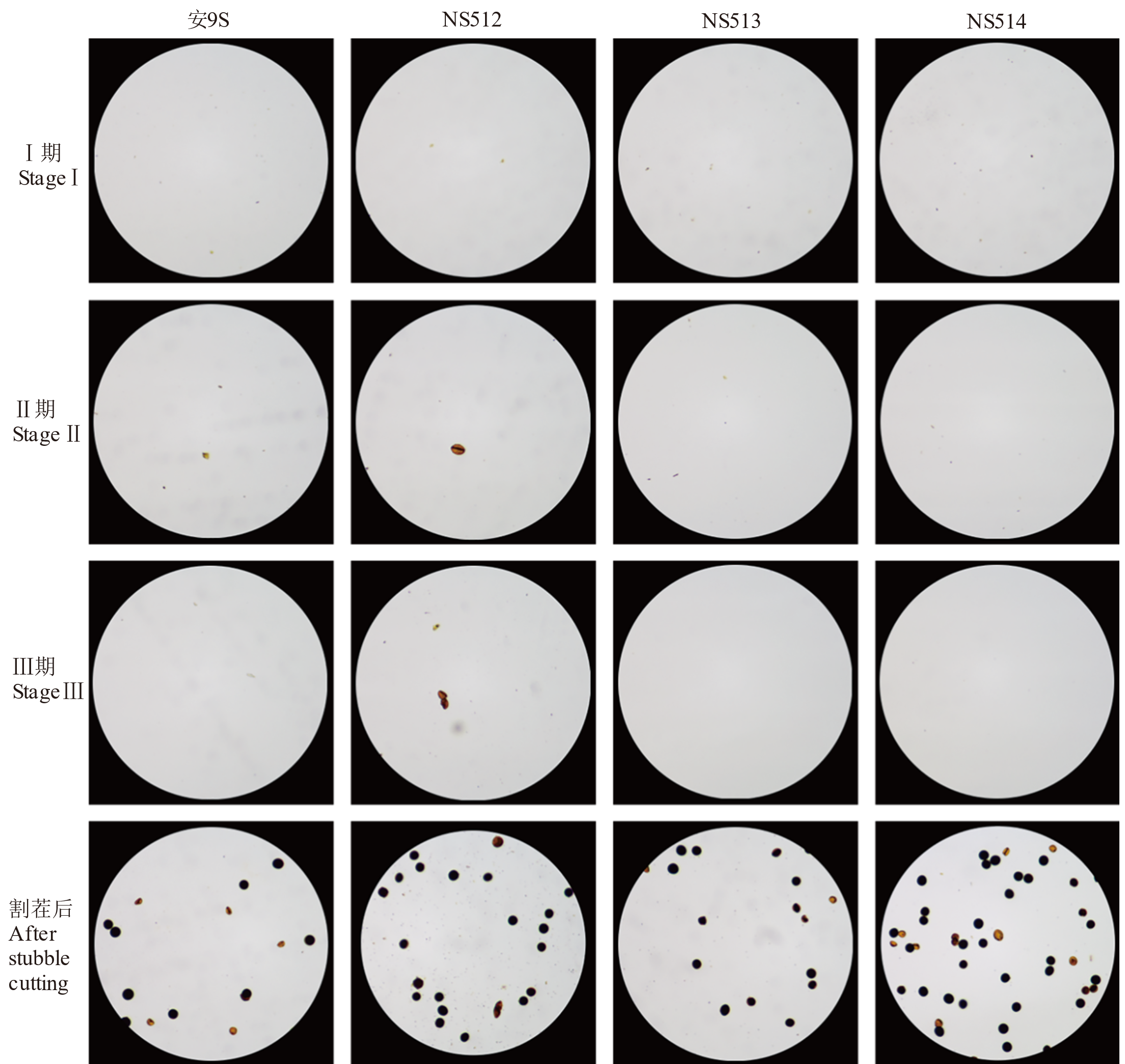
图6 试验组在Ⅰ期、Ⅱ期、Ⅲ期及割茬后的花粉育性 Ⅰ、Ⅱ、Ⅲ期分别指播种于2024年6月7日、18日和25日。
Fig. 6. Pollen fertility of the experimental group in the first, second and third stages and after stubble cutting The sowing dates for stage Ⅰ, Ⅱ, and Ⅲ were June 7, 18 and 25, 2024, respectively.
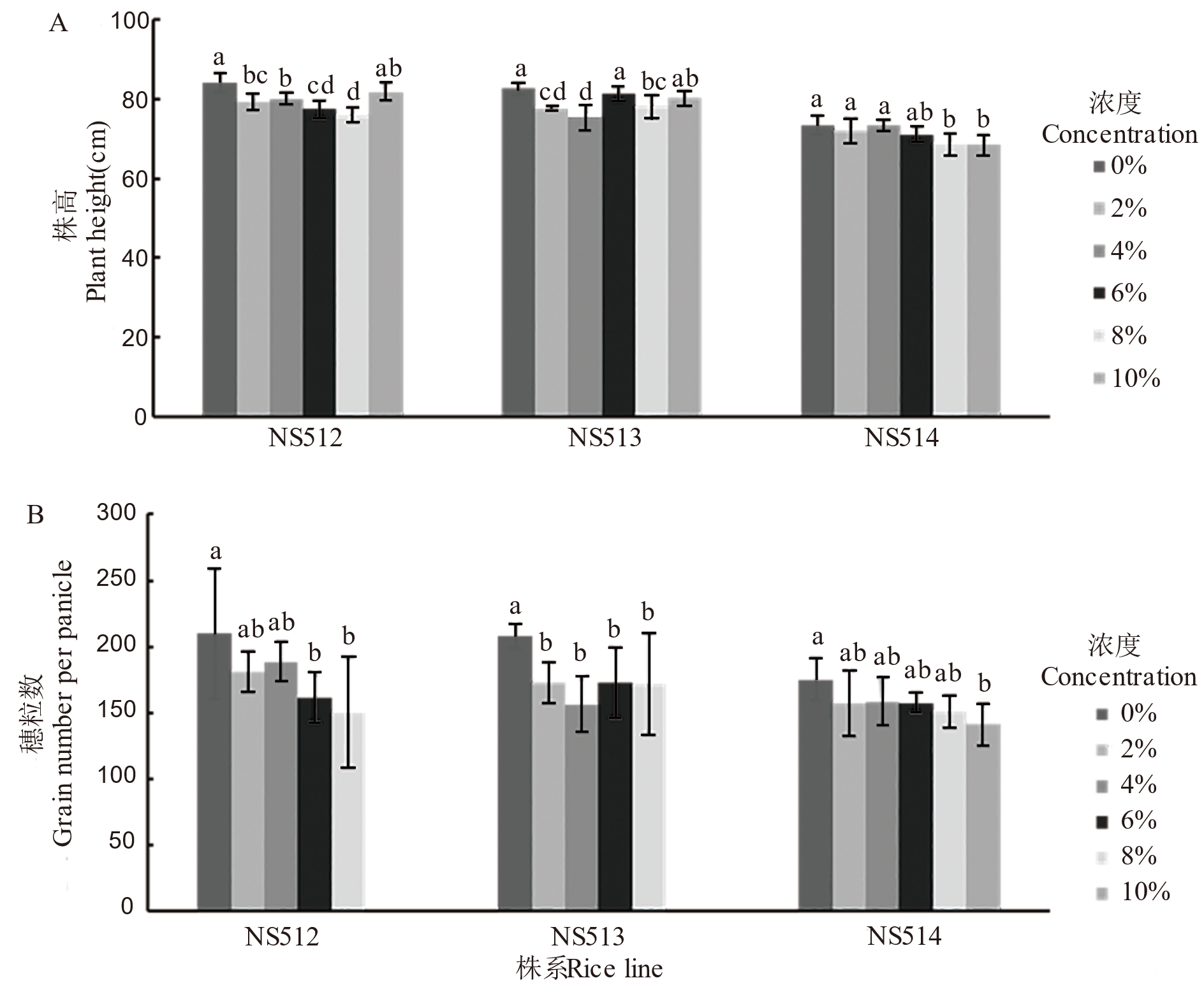
图7 不同浓度甲禾灵处理后的株高和穗粒数 不同小写字母表示同一株系在不同处理之间差异显著(P<0.05)。
Fig. 7. Plant height and grain number per panicle of mutants treated with different concentrations of haloxyfop-P-methyl Different lowercase letters indicate significant difference among different treatments (P < 0.05).
| 农艺性状 Agronomic trait | 对照组 Control group | 试验组 Experimental group | |||
|---|---|---|---|---|---|
| 安9S An 9S | NS512 | NS513 | NS514 | ||
| 株高 Plant height(cm) | 69.65±5.10 | 84.05±2.47** | 82.63±1.59** | 73.30±2.35 | |
| 抽穗期Heading date(d) | 70 | 70 | 70 | 70 | |
| 单株有效穗数Effective panicle number per plant | 9.37±1.85 | 9.75±1.67 | 10.88±1.13 | 9.33±0.52 | |
| 穗长Panicle length(cm) | 25.00±0.51 | 23.12±2.28 | 24.40±0.90 | 24.62±0.43 | |
| 剑叶长度Flag leaf length(cm) | 33.52±1.52 | 34.60±3.74 | 39.59±1.53** | 32.81±3.02 | |
| 剑叶宽度Flag leaf width(cm) | 1.49±0.06 | 1.68±0.08** | 1.70±0.10** | 1.37±0.07* | |
表3 T3代纯合株系农艺性状
Table 3. Agronomic traits of T3 homozygous lines
| 农艺性状 Agronomic trait | 对照组 Control group | 试验组 Experimental group | |||
|---|---|---|---|---|---|
| 安9S An 9S | NS512 | NS513 | NS514 | ||
| 株高 Plant height(cm) | 69.65±5.10 | 84.05±2.47** | 82.63±1.59** | 73.30±2.35 | |
| 抽穗期Heading date(d) | 70 | 70 | 70 | 70 | |
| 单株有效穗数Effective panicle number per plant | 9.37±1.85 | 9.75±1.67 | 10.88±1.13 | 9.33±0.52 | |
| 穗长Panicle length(cm) | 25.00±0.51 | 23.12±2.28 | 24.40±0.90 | 24.62±0.43 | |
| 剑叶长度Flag leaf length(cm) | 33.52±1.52 | 34.60±3.74 | 39.59±1.53** | 32.81±3.02 | |
| 剑叶宽度Flag leaf width(cm) | 1.49±0.06 | 1.68±0.08** | 1.70±0.10** | 1.37±0.07* | |
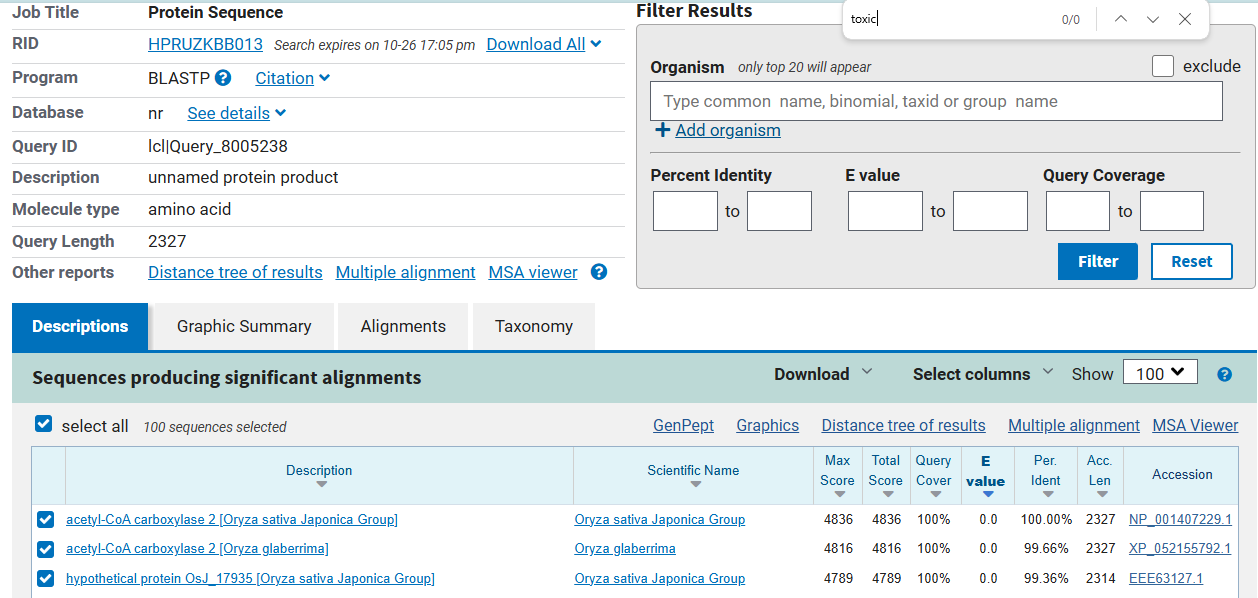
图8 OsACC1蛋白在 NCBI 中与已知毒蛋白序列同源性比对结果
Fig. 8. Results of homology comparison between OsACC1 protein and known toxic protein sequence in NCBI
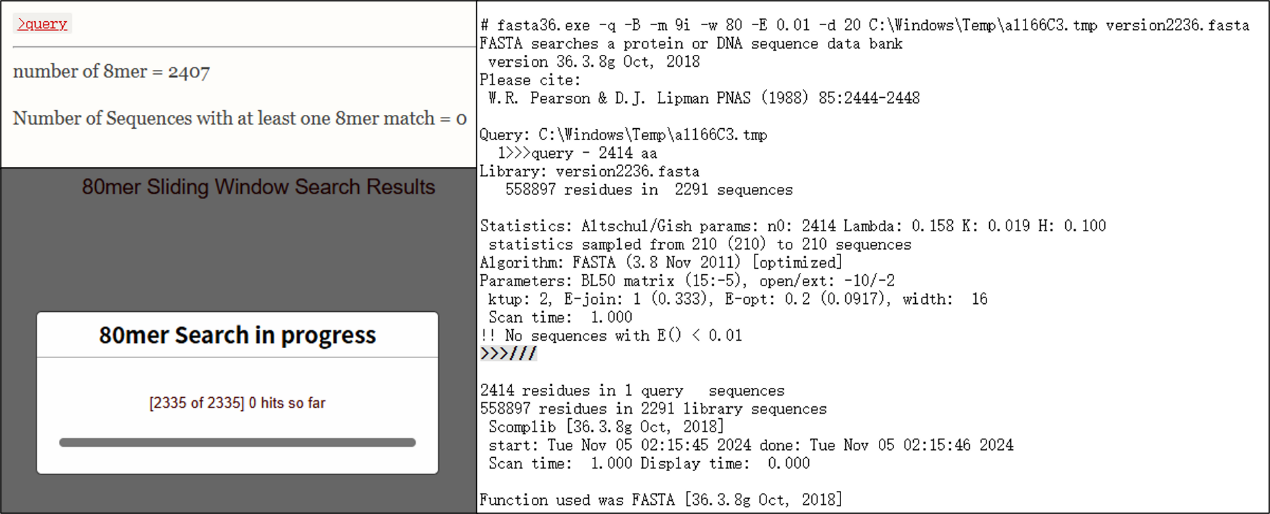
图9 OsACC1在Allergen Online中的检索结果
Fig. 9. Search results of OsACC1 in Allergen Online
| [1] | Zou B, Mishra A, Luo B. Aging population, farm succession, and farmland usage: Evidence from rural China[J]. Land Use Policy, 2018, 77(1): 437-445. |
| [2] | Liao L, Long H, Gao X, Ma E. Effects of land use transitions and rural aging on agricultural production in China’s farming area: A perspective from changing labor employing quantity in the planting industry[J]. Land Use Policy, 2019, 88: 104152. |
| [3] | Farooq M, Siddique K H M, Rehman H, Aziz T, Lee D J, Wahid A. Rice direct seeding: Experiences, challenges and opportunities[J]. Soil and Tillage Research, 2011, 111(2): 87-98. |
| [4] | Kumar V, Ladha J K. Direct seeding of rice: Recent developments and future research needs[D]. Advances in Agronomy, 2011(111): 297-413. |
| [5] | 高婷. 水稻机插秧田杂草发生及防除研究[D]. 南京: 南京农业大学, 2014. |
| Gao T. Study on the occurrenc and control of weeds in mechanized transplanting rice[D]. Nanjing: Nanjing Agricultural University, 2014. (in Chinese with English abstract) | |
| [6] | 陆松艳. 宿迁市宿城区稻麦连作田草害加重原因及防控对策[J]. 农业科技通讯, 2024(1): 141-144. |
| Lu S Y. Causes and control countermeasures of grass damage in rice-wheat continuous cropping fields in Sucheng District of Suqian City[J]. Bulletin of Agricultural Science and Technology, 2024(1): 141-144. (in Chinese) | |
| [7] | 袁树忠, 陈勇睿, 夏志铭, 蔡靖萱, 陈月阳, 邓维. 双稃草对水稻生长和产量性状的影响及其生态经济阈值[J]. 湖北农业科学, 2022, 61(6): 69-75. |
| Yuan S Z, Chen Y R, Xia Z M, Cai J X, Chen Y Y, Deng W. Influences of Diplachne fusca(L.) Beauv. on growth and yield traits of rice and its eco-economic threshold[J]. Hubei Agricultural Sciences, 2022, 61(6): 69-75. (in Chinese) | |
| [8] | 朱文达, 周普国, 何燕红, 杨峻, 林荣华, 齐文全, 李林, 欧阳灿彬. 千金子对水稻生长和产量性状的影响及其防治经济阈值[J]. 南方农业学报, 2018, 49(5): 863-869. |
| Zhu W D, Zhou P G, He Y H, Yang J, Lin R H, Qi W Q, Li L, Ouyang C B. Influence of Leptochloa chinensis(L.) Nees. on growth and yield properties of rice and its economic threshold of control[J]. Journal of Southern Agriculture, 2018, 49(5): 863-869. (in Chinese with English abstract) | |
| [9] | 朱文达. 稗对水稻生长和产量性状的影响及其经济阈值[J]. 植物保护学报, 2005, 32(1): 81-86. |
| Zhu W D. Influence of barnyardgrass, Echinochloa crusgalli, on the growth and yield of paddy rice and its economic threshold[J]. Journal of Plant Protection, 2005, 32(1): 81-86. (in Chinese with English abstract) | |
| [10] | Juliano L M, Donayre D K M, Martin E C, Beltran J C. Weedy rice: An expanding problem in direct-seeded rice in the Philippines[J]. Weed Biology and Management, 2020, 20(2): 27-37. |
| [11] | Trebst A, Depka B, Jäger J, Oettmeier W. Reversal of the inhibition of photosynthesis by herbicides affecting hydroxyphenylpyruvate dioxygenase by plastoquinone and tocopheryl derivatives in Chlamydomonas reinhardtii[J]. Pest Management Science, 2004, 60(7): 669-674. |
| [12] | 郭美俊. 谷子对除草剂抗性的生理特性及产量性状的影响[D]. 太谷: 山西农业大学, 2017. |
| Guo M J. Effects of physiological characteristics and yield traits of millet resistance to herbicide[D]. Taigu: Shanxi Agricultural University, 2017. (in Chinese with English abstract) | |
| [13] | 高峰. 化学除草剂的除草原理及应用[J]. 山西林业, 2014(1): 32-33, 42. |
| Gao F. Weeding principle and application of chemical herbicides[J]. Forestry of Shanxi, 2014(1): 32-33, 42. (in Chinese) | |
| [14] | 王保明, 颜士华, 谭晓风. 植物ACCase基因的结构功能及表达调控研究[J]. 安徽农学通报, 2021, 27(1): 17-24. |
| Wang B M, Yan S H, Tan X F. Study of the structural function and expressing regulation of ACCase genes[J]. Anhui Agricultural Science Bulletin, 2021, 27(1): 17-24. (in Chinese with English abstract) | |
| [15] | Takano H K, Ovejero R F L, Belchior G G, Maymone G P L, Dayan F E. ACCase-inhibiting herbicides: Mechanism of action, resistance evolution and stewardship[J]. Scientia Agricola, 2021, 78: e20190102. |
| [16] | 黄乾龙, 王楚桃, 欧阳杰, 朱子超, 何永歆, 蒋刚, 管玉圣, 熊英, 李贤勇. 重庆地区马唐种群对2种乙酰辅酶A羧化酶抑制剂类除草剂的敏感性[J]. 植物保护, 2024, 50(5): 267-271, 305. |
| Huang Q L, Wang C T, Ouyang J, Zhu Z C, He Y X, Jiang G, Guan Y S, Xiong Y, Li X Y. Sensitivity of Digitaria sanguinalis population to two acetyl-CoA carboxylase-inhibiting herbicides in Chongqing area[J]. Plant Protection, 2024, 50(5): 267-271, 305. (in Chinese with English abstract) | |
| [17] | 刘博宏, 叶非. 芳氧苯氧基丙酸酯类除草剂的应用进展[J]. 农药科学与管理, 2011, 32(2): 20-25. |
| Liu B H, Ye F. Application of aryloxyphenoxypropionate herbicides[J]. Pesticide Science and Administration, 2011, 32(2): 20-25. (in Chinese with English abstract) | |
| [18] | 张保龙, 王金彦, 凌溪铁. 使植物具有除草剂抗性的ACCase突变型蛋白及其应用: CN108359646A[P]. 2018-08-03. |
| Zhang B L, Wang J Y, Ling X T. ACCase mutant protein with herbicide resistance in plants and its application: CN108359646A[P]. 2018-08-03. (in Chinese) | |
| [19] | 张保龙, 王金彦, 凌溪铁, 郭冬姝. 具有除草剂抗性的ACCase突变型基因和蛋白及其应用: CN109082416B[P]. 2021-10-26. |
| Zhang B L, Wang J Y, Ling X T, Guo D S. ACCase mutant gene and protein with herbicide resistance and applications: CN109082416B[P]. 2021-10-26. (in Chinese) | |
| [20] | 张保龙, 王金彦, 凌溪铁. 一种水稻ACCase突变型基因及其在植物抗除草剂中的应用: CN109371000A[P]. 2019-02-22. |
| Zhang B L, Wang J Y, Ling X T. A mutant gene of ACCase in rice and its application in plant herbicide resistance: CN109371000A[P]. 2019-02-22. (in Chinese) | |
| [21] | 吴丹丹, 许敏敏, 刘兆明, 梁静, 马引, 李峰, 李娟. 抗ACCase抑制剂类除草剂水稻种质的创制与鉴定[J]. 中国种业, 2024(2): 72-76. |
| Wu D D, Xu M M, Liu Z M, Liang J, Ma Y, Li F, Li J. Creation and identification of rice germplasm resistant to ACCase inhibitor herbicides[J]. China Seed Industry, 2024(2): 72-76. (in Chinese with English abstract) | |
| [22] | 江群, 凌溪铁, 唐兆成, 周珍珍, 张保龙. EMS诱变创制水稻抗乙酰辅酶A羧化酶抑制剂类除草剂种质[J]. 江苏农业学报, 2023, 39(2): 305-312. |
| Jiang Q, Ling X T, Tang Z C, Zhou Z Z, Zhang B L. EMS mutagenesis to create rice anti-acetyl-CoA carboxylase inhibitor-herbicide germplasm[J]. Jiangsu Journal of Agricultural Sciences, 2023, 39(2): 305-312. (in Chinese with English abstract) | |
| [23] | Xu R, Li J, Liu X, Shan T, Qin R, Wei P. Development of plant prime-editing systems for precise genome editing[J]. Plant Communications, 2020, 1(3): 100043. |
| [24] | 刘小双. CRISPR文库筛选方法研究与水稻抗除草剂种质资源创新[D]. 合肥: 安徽农业大学, 2022. |
| Liu X S. Research on CRISPR library screening method and herbicide resistance in rice[D]. Hefei: Anhui Agricultural University, 2022. (in Chinese with English abstract) | |
| [25] | 胡忠孝, 田妍, 徐秋生. 中国杂交水稻推广历程及现状分析[J]. 杂交水稻, 2016, 31(2): 1-8. |
| Hu Z X, Tian Y, Xu Q S. Review of extension and analysis on current status of hybrid rice in China[J]. Hybrid Rice, 2016, 31(2): 1-8. (in Chinese with English abstract) | |
| [26] | 龙彭年. 中国两系法杂交水稻研发成就和发展策略[J]. 世界农业, 2002(8): 36-38. |
| Long P N. Research achievements and development strategies of two-line hybrid rice in China[J]. World Agriculture, 2002(8): 36-38. (in Chinese with English abstract) | |
| [27] | 李全林. CRISPR/Cas9系统在水稻重要农艺性状基因筛选和分子设计育种中的应用[D]. 上海: 上海交通大学, 2016. |
| Li Q L. Application of CRISPR/Cas9 system in gene screening and molecular design breeding of important agronomic traits in rice[D]. Shanghai: Shanghai Jiao Tong University, 2016. (in Chinese with English abstract) | |
| [28] | 杨学智, 韩云哲, 朴雪梅, 徐伟豪, 白学峰, 柳洪良. 水稻诱变育种研究进展[J]. 北方水稻, 2024, 54(3): 41-50. |
| Yang X Z, Han Y Z, Piao X M, Xu W H, Bai X F, Liu H L. Research progress of mutation breeding in rice[J]. Nroth Rice, 2024, 54(3): 41-50. (in Chinese with English abstract) | |
| [29] | 段敏, 谢留杰, 高秀莹, 唐海娟, 黄善军, 潘晓飚. 利用CRISPR/Cas9技术创制广亲和水稻温敏雄性不育系[J]. 中国水稻科学, 2023, 37(3): 233-243. |
| Duan M, Xie L J, Gao X Y, Tang H J, Huang S J, Pan X B. Creation of thermo-sensitive genic male sterile rice lines with wide compatibility based on CRISPR/Cas9 technology[J]. Chinese Journal of Rice Science, 2023, 37(3): 233-243. (in Chinese with English abstract) | |
| [30] | 李景芳, 温舒越, 赵利君, 陈庭木, 周振玲, 孙志广, 刘艳, 陈海元, 张云辉, 迟铭, 邢运高, 徐波, 徐大勇, 王宝祥. 基于CRISPR/Cas9技术创制耐盐香稻[J]. 中国水稻科学, 2023, 37(5): 478-485. |
| Li J F, Wen S Y, Zhao L J, Chen T M, Zhou Z L, Sun Z G, Liu Y, Chen H Y, Zhang Y H, Chi M, Xing Y G, Xu B, Xu D Y, Wang B X. Development of aromatic salt-tolerant rice based on CRISPR/Cas9 technology[J]. Chinese Journal of Rice Science, 2023, 37(5): 478-485. (in Chinese) | |
| [31] | 尹丽颖, 张元野, 李荣田, 何明良, 王芳权, 许扬, 刘欣欣, 潘婷婷, 田晓杰, 卜庆云, 李秀峰. 利用CRISPR/Cas9技术创制高效抗除草剂水稻[J]. 中国水稻科学, 2022, 36(5): 459-466. |
| Yin L Y, Zhang Y Y, Li R T, He M L, Wang F Q, Xu Y, Liu X X, Pan T T, Tian X J, Bu Q Y, Li X F. Improvement of herbicide resistance in rice by using CRISPR/Cas9 system[J]. Chinese Journal of Rice Science, 2022, 36(5): 459-466. (in Chinese) | |
| [32] | 单晓飞. 瓦房店市蔬菜种植户农药使用情况调研报告[D]. 大连: 大连海洋大学, 2024. |
| Shan X F. Research report on pesticide use by vegetable growers in Wafangdian City[D]. Dalian: Dalian Ocean University, 2024. (in Chinese with English abstract) | |
| [33] | 覃玉芬, 廖山岳, 郭新颖, 周海, 房耀宇, 滕开冲, 刘芳, 覃宝祥, 庄楚, 李容柏. 利用CRISPR/Cas9基因编辑系统创制新型水稻温敏雄性核不育系[J]. 分子植物育种, 2023, 21(5): 1551-1561. |
| Qin Y F, Liao S Y, Guo X Y, Zhou H, Fang Y Y, Teng K C, Liu F, Qin B X, Zhuang C X, Li R B. Generation of a new thermo-sensitive genic male sterile line by using CRISPR/Cas9 gene editing system[J]. Molecular Plant Breeding, 2023, 21(5): 1551-1561. (in Chinese with English abstract) | |
| [34] | 王新, 韩悦, 冯璇, Nawaz G, 罗亮, 刘芳, 覃宝祥, 刘耀光, 李容柏. 应用CRISPR-Cas9基因编辑技术改良传统优质糯稻品种[J]. 分子植物育种, 2019, 17(19): 6332-6342. |
| Wang X, Han Y, Feng X, Nawaz G, Luo L, Liu F, Qin B X, Liu Y G, Li R B. Improvement of a traditional high-quality glutinous rice variety by CRISPR-Cas9 gene editing system[J]. Molecular Plant Breeding, 2019, 17(19): 6332-6342. (in Chinese with English abstract) | |
| [35] | 孔铭. 基于CRISPR/Cas9基因编辑技术创制抗病玉米种质[D]. 北京: 中国农业科学院, 2024. |
| Kong M. Creation of disease-resistant maize germplasm using the CRISPR/Cas9 gene editing technology[D]. Beijing: Chinese Academy of Agricultural Sciences, 2024. (in Chinese with English abstract) | |
| [36] | Neve P. Challenges for herbicide resistance evolution and management: 50 years after Harper[J]. Weed Research, 2007, 47(1): 365-369. |
| [37] | Heap I. The international herbicide-resistant weed database[EB/OL]. (2024-10-28). https://weedscience.org/Home.aspx. |
| [38] | 王新, 侯佳文, 柳文睿, 鲍佳. 典型咪唑啉酮类除草剂的微生物降解研究进展[J]. 农药学学报, 2021, 23(3): 469-475. |
| Wang X, Hou J W, Liu W R, Bao J. Progress in microbial degradation of typical imidazolinone herbicides[J]. Chinese Journal of Pesticide Science, 2021, 23(3): 469-475. (in Chinese with English abstract) | |
| [39] | Aichele T M, Penner D. Adsorption, desorption, and degradation of imidazolinones in soil[J]. Weed Technology, 2005, 19(1): 154-159. |
| [40] | 谢勇波. 高效氟吡甲禾灵在烟田中的残留降解及其对烤烟产质量的影响[D]. 长沙: 湖南农业大学, 2011. |
| Xie Y B. Residue degradation of high-efficiency haloxyfop-methyl in tobacco field and its effect on yield and quality of flue-cured tobacco[D]. Changsha: Hunan Agricultural University, 2011. (in Chinese with English abstract) |
| [1] | 段敏, 谢留杰, 岳雅妮, 黄善军. 基于CRISPR/Cas9技术创制优质香味粳稻品系[J]. 中国水稻科学, 2026, 40(2): 235-243. |
| [2] | 程朝平, 何旎清, 白康呈, 林少俊, 黄凤凰, 刘军化, 程祖锌, 黄成志, 杨德卫. 聚合稻瘟病抗性基因Pigm-1和Pid2的水稻三系不育系福梦A的选育与利用[J]. 中国水稻科学, 2026, 40(1): 72-84. |
| [3] | 陈玲, 林文英, 梁丽梅, 欧阳由男, 叶胜海, 季芝娟. 水稻开花习性及其在粳型三系不育系选育中的应用[J]. 中国水稻科学, 2025, 39(6): 731-743. |
| [4] | 陶士博, 许娜, 徐正进, 刘畅, 徐铨. 水稻发芽期耐冷基因Cold6的克隆[J]. 中国水稻科学, 2025, 39(6): 751-759. |
| [5] | 陈伟, 叶元妹, 赵剑华, 冯志明, 陈宗祥, 胡珂鸣, 左示敏. 利用CRISPR/Cas9技术改良南粳46抽穗期[J]. 中国水稻科学, 2025, 39(6): 760-770. |
| [6] | 杨佳欣, 管玉圣, 杜润, 李贤勇, 蔡座坤, 王楚桃, 阳启样, 何永歆, 朱子超, 张毅. 利用CRISPR/Cas9技术创制无芽鞘紫线的香型环境非敏感隐性核雄性不育种质[J]. 中国水稻科学, 2025, 39(5): 643-649. |
| [7] | 李伟, 徐霞, 边莹, 张晓波, 范炯炯, 程本义, 杨仕华, 吴建利, 魏鑫, 曾波, 龚俊义. 5460个三系杂交稻品种的不育系细胞质来源分析[J]. 中国水稻科学, 2024, 38(6): 653-664. |
| [8] | 何勇, 刘耀威, 熊翔, 祝丹晨, 王爱群, 马拉娜, 王廷宝, 张健, 李建雄, 田志宏. 利用CRISPR/Cas9技术编辑OsOFP30基因创制水稻粒型突变体[J]. 中国水稻科学, 2024, 38(5): 507-515. |
| [9] | 许丹洁, 林巧霞, 李正康, 庄小倩, 凌宇, 赖美玲, 陈晓婷, 鲁国东. OsOPR10正调控水稻对稻瘟病和白叶枯病的抗性[J]. 中国水稻科学, 2024, 38(4): 364-374. |
| [10] | 刘慧敏, 周杰强, 胡远艺, 田妍, 雷斌, 李建武, 魏中伟, 唐文帮. 水稻小粒不育系新组合卓两优1126的高产特征[J]. 中国水稻科学, 2024, 38(2): 160-171. |
| [11] | 梁楚炎, 巫明明, 黄凤明, 翟荣荣, 叶靖, 朱国富, 俞法明, 张小明, 叶胜海. 基因编辑及全基因组选择技术在水稻育种中的应用展望[J]. 中国水稻科学, 2024, 38(1): 1-12. |
| [12] | 李景芳, 温舒越, 赵利君, 陈庭木, 周振玲, 孙志广, 刘艳, 陈海元, 张云辉, 迟铭, 邢运高, 徐波, 徐大勇, 王宝祥. 基于CRISPR/Cas9技术创制耐盐香稻[J]. 中国水稻科学, 2023, 37(5): 478-485. |
| [13] | 李刚, 高清松, 李伟, 张雯霞, 王健, 程保山, 王迪, 高浩, 徐卫军, 陈红旗, 纪剑辉. 定向敲除SD1基因提高水稻的抗倒性和稻瘟病抗性[J]. 中国水稻科学, 2023, 37(4): 359-367. |
| [14] | 段敏, 谢留杰, 高秀莹, 唐海娟, 黄善军, 潘晓飚. 利用CRISPR/Cas9技术创制广亲和水稻温敏雄性不育系[J]. 中国水稻科学, 2023, 37(3): 233-243. |
| [15] | 裴峰, 王广达, 高鹏, 冯志明, 胡珂鸣, 陈宗祥, 陈红旗, 崔傲, 左示敏. 敲除OsNramp5基因创制低镉优质粳稻新材料的应用评价[J]. 中国水稻科学, 2023, 37(1): 16-28. |
| 阅读次数 | ||||||
|
全文 |
|
|||||
|
摘要 |
|
|||||
