
中国水稻科学 ›› 2026, Vol. 40 ›› Issue (5): 584-597.DOI: 10.16819/j.1001-7216.2026.251212
柴炳泽1, 王俊格1, 吴凯雄1, 刘嘉龙1, 吴越1, 王荟森1, 谭霖1, 任德勇1, 高振宇1, 朱丽1, 张强1,2, 张光恒1,2, 钱前1,2,*( ), 胡江1,2,*()
收稿日期:2025-12-27
修回日期:2026-03-17
出版日期:2026-09-10
发布日期:2026-09-16
通讯作者:
*email: qianqian188@hotmail.com;基金资助:
CHAI Bingze1, WANG Junge1, WU Kaixiong1, LIU Jialong1, WU Yue1, WANG Huisen1, TAN Lin1, REN Deyong1, GAO Zhenyu1, ZHU Li1, ZHANG Qiang1,2, ZHANG Guangheng1,2, QIAN Qian1,2,*(), HU Jiang1,2,*()
Received:2025-12-27
Revised:2026-03-17
Online:2026-09-10
Published:2026-09-16
摘要:
【目的】粒形是决定水稻产量的重要因素之一,挖掘水稻粒形调控新基因,完善水稻粒形遗传调控网络,为高产水稻分子设计育种提供基因资源。【方法】以EMS诱变粳稻品种武运粳7号(W7)获得的大粒突变体gsn4为试验材料,系统开展表型鉴定、细胞学观察、基因定位、功能验证、亚细胞定位及单倍型分析等对候选基因进行克隆和功能分析。【结果】表型鉴定表明,gsn4突变体表现出一因多效性,与野生型相比,其粒长、粒宽及千粒重显著增加,而株高、穗长及每穗粒数显著降低;细胞学分析显示,gsn4通过影响颖壳细胞的增殖与扩张过程调控水稻籽粒大小。图位克隆结合CRISPR/Cas9基因编辑验证,明确LOC_Os04g46450为GSN4的候选基因,该基因编码核定位的E3泛素连接酶蛋白,属于水稻粒形负调控因子,通过参与油菜素内酯(BR)生物合成通路调控水稻生长发育进程。单倍型分析结果筛选出对粒宽和千粒重调控效果最优的优异单倍型Hap1。【结论】本研究明确了GSN4的功能及调控机制,丰富了水稻粒形遗传调控网络,为高产水稻品种的分子设计育种提供了重要的基因资源和理论依据。
柴炳泽, 王俊格, 吴凯雄, 刘嘉龙, 吴越, 王荟森, 谭霖, 任德勇, 高振宇, 朱丽, 张强, 张光恒, 钱前, 胡江. 水稻粒形和穗粒数基因GSN4的克隆与单倍型分析[J]. 中国水稻科学, 2026, 40(5): 584-597.
CHAI Bingze, WANG Junge, WU Kaixiong, LIU Jialong, WU Yue, WANG Huisen, TAN Lin, REN Deyong, GAO Zhenyu, ZHU Li, ZHANG Qiang, ZHANG Guangheng, QIAN Qian, HU Jiang. Cloning and Haplotype Analysis of GSN4, a Gene for Grain Size and Grain Number in Rice[J]. Chinese Journal OF Rice Science, 2026, 40(5): 584-597.
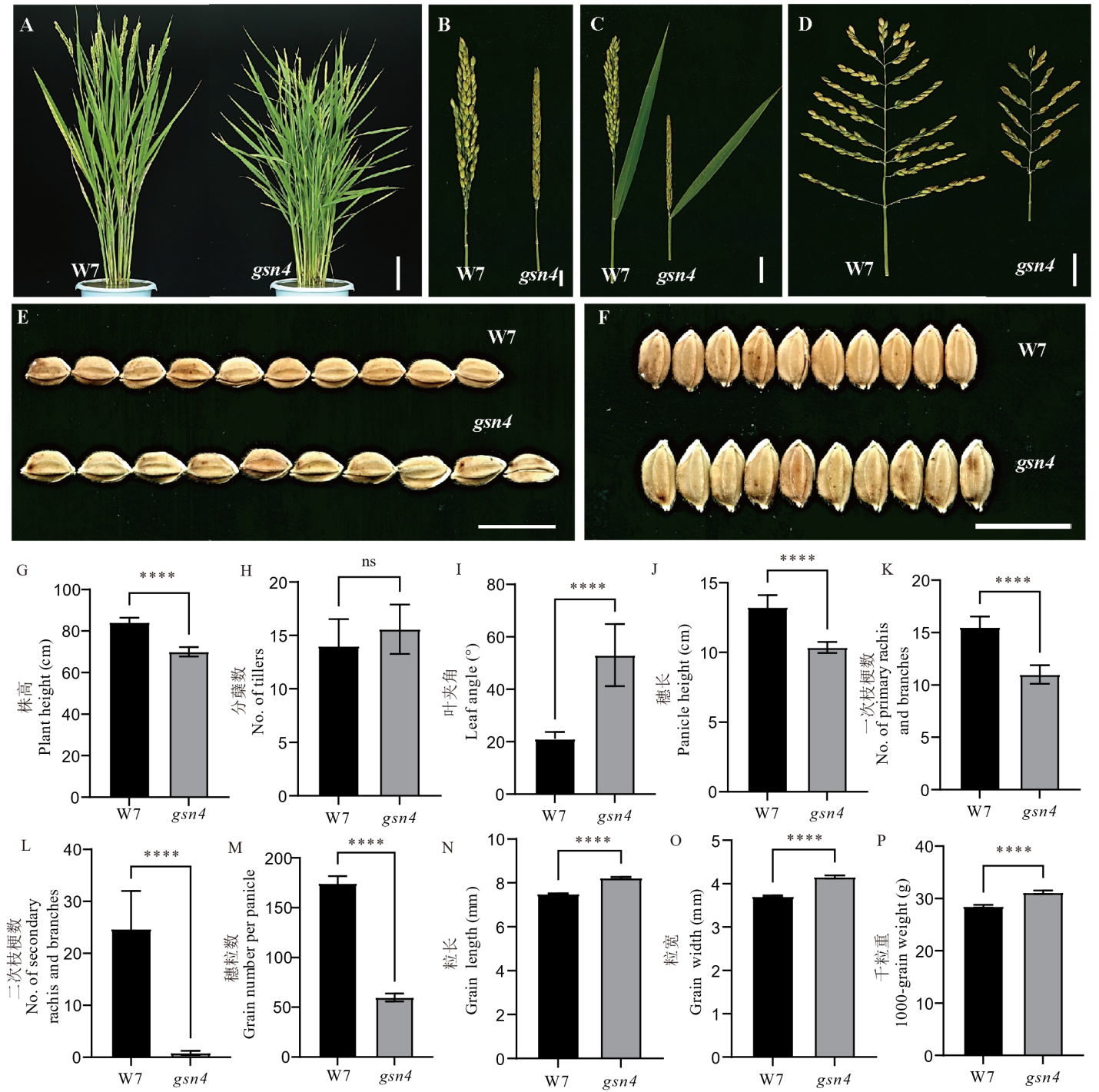
图1 gsn4的表型分析 A:W7与gsn4突变体的植株形态,标尺为10 cm;B~D:两者的穗部形态,标尺均为1 cm;C:两者的叶夹角,标尺为 1 cm;E~F:两者的籽粒性状(粒长、粒宽),标尺均为1 cm。G~P:W7及gsn4表型分析。数据以均值±标准差表示(n=20)。****表示 P < 0.0001,ns表示不显著。
Fig. 1. Phenotypic analysis of gsn4 A, Plant morphologies of W7 and gsn4, bar = 10 cm; B−D, Panicle morphologies of the two materials, bars = 1 cm; C, Leaf angle phenotypes of the two materials, bar = 1 cm; E−F, Grain traits (grain length, grain width) of the two materials, bars = 1 cm;G−P, Phenotypic analysis of W7 and gsn4. Data are presented as mean ± standard deviation (n=20). ****, P<0.0001; ns, Not significant.
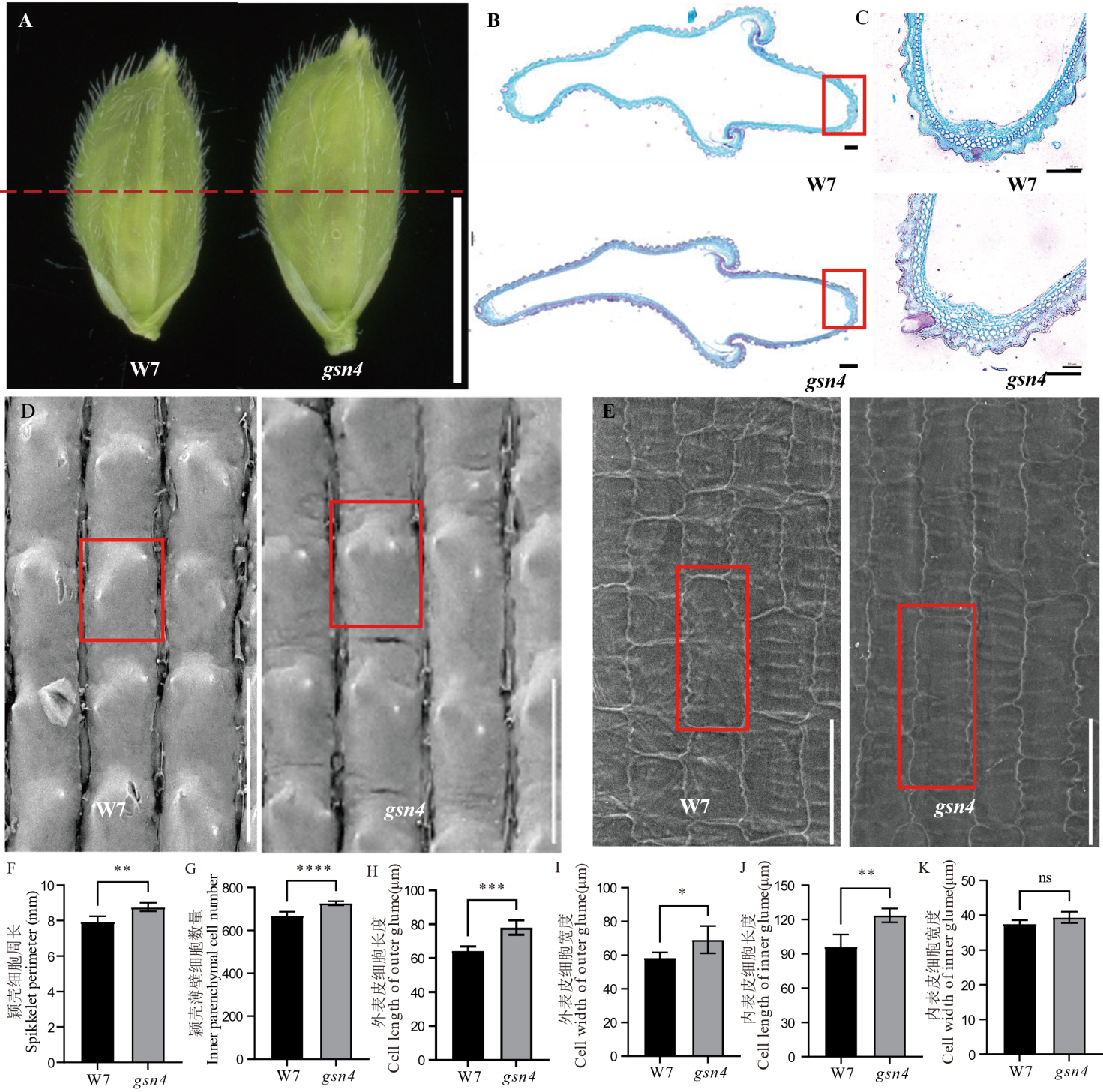
图2 W7及gsn4颖壳细胞大小分析 A:W7及gsn4的颖壳,标尺为5 mm。B:W7和gsn4颖壳的横切面,标尺为100 μm。C图为B图中横切面局部放大,标尺为100 μm。D~E:W7及gsn4颖壳外表皮细胞(D)及内表皮细胞(E),标尺为100 μm。F~K:W7及gsn4颖壳细胞性状统计。数据以均值±标准差表示(n=20)。****表示 P < 0.0001, ***表示 P < 0.001, **表示 P < 0.01, *表示 P < 0.05,ns表示不显著。
Fig. 2. Analysis of the cell size of W7 and gsn4 glumes A, Glumes of W7 and gsn4 mutant, bar = 5 mm. B, Cross-sections of glumes of W7 and gsn4, bar = 100 μm. C, Partial magnification of the cross-section in B, bar = 100 μm. D-E, Outer epidermal cells (D) and inner epidermal cells (E) of glumes of W7 and gsn4, bars = 100 μm. F−K, Statistics of glume cell traits of W7 and gsn4. Data are expressed as mean ± standard deviation (n=20). ****, P<0.0001; ***, P<0.001; **, P<0.01; *, P<0.05; ns, Not significant.
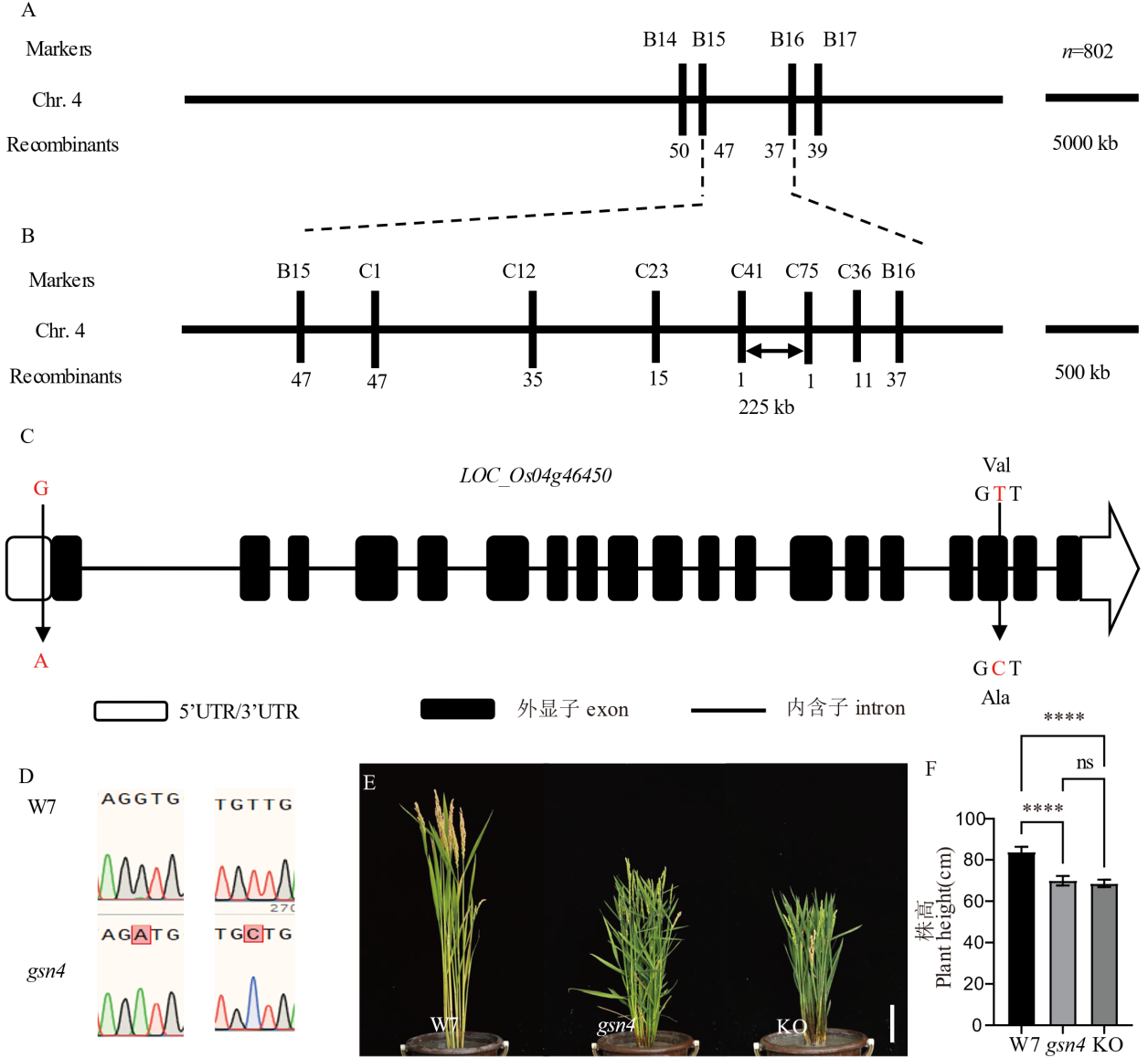
图3 GSN4基因的定位与敲除株系表型验证 A~B:GSN4的定位。C:GSN4的突变位点。D:GSN4的测序分析。E:植株形态,标尺为10 cm。F:株高调查。数据以均值±标准差表示(n=10)。 t 检验,****表示 P < 0.0001,ns表示不显著。
Fig. 3. Mapping of GSN4 locus and the knockout of GSN4 A−B, Mapping of GSN4; C, Mutation site of GSN4; D, Sequencing analysis of GSN4; E, Plant morphology, bar = 10 cm; F, Investigation of plant height. Data are expressed as mean ± standard deviation (n=10). ****, P<0.0001; ns, Not significant.
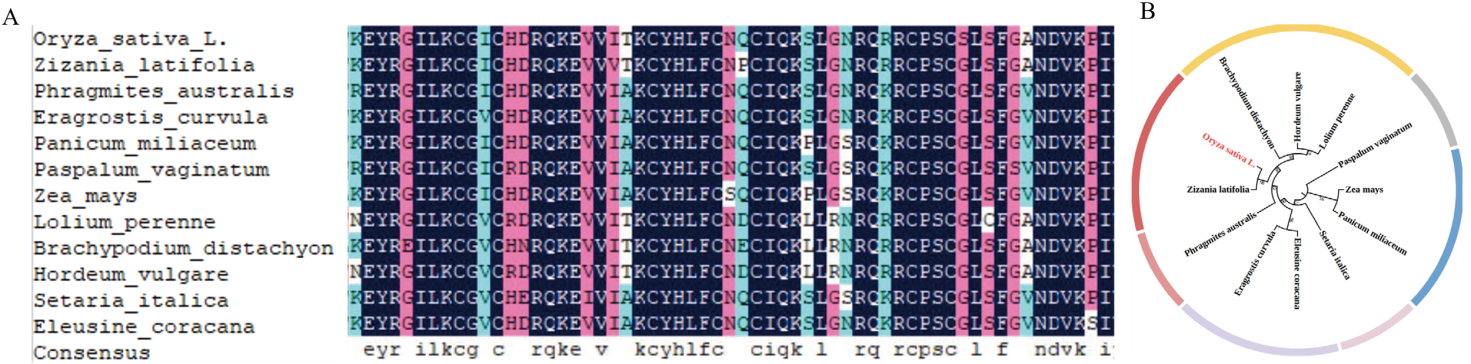
图4 GSN4蛋白的系统发育分析 A:12种GSN4同源物的氨基酸序列比对。完全或部分保守的氨基酸分别用蓝色和绿色阴影表示。B:GSN4的系统树及其同源物。代表性蛋白序列的登录号如下:水稻(Oryza sativa L., CAD41603.3)、海雀稗(Paspalum vaginatum, KAJ1260653.1)、玉米(Zea mays, NP 001333816.1)、糜子(Panicum miliaceum, RLN12872.1)、谷子(Setaria italica, RCV42415.1)、菰(Zizania latifolia, KAL5214521.1)、黑麦草(Lolium perenne, XP 051193481.1)、大麦(Hordeum vulgare subsp. vulgare, XP 044977658.1)、二穗短柄草(Brachypodium distachyon, XP 003577829.1)、芦苇(Phragmites australis, XP 062184470.1)、弯叶画眉草(Eragrostis curvula, TVU13814.1)、穇(Eleusine coracana subsp. coracana, KAK3143048.1)。
Fig. 4. Phylogenetic analysis of GSN4 protein A, Amino acid sequence alignment of twelve GSN4 homologs. Fully or partially conserved amino acids are shaded in blue and green, respectively. B, Phylogenetic tree of GSN4 and its homologs. The accession numbers of representative protein sequences are as follows: Oryza sativa L. (CAD41603.3), Paspalum vaginatum (KAJ1260653.1), Zea mays (NP_001333816. 1), Panicum miliaceum (RLN12872.1), Setaria italica (RCV42415.1), Zizania latifolia (KAL5214521.1), Lolium perenne (XP_051193481.1), Hordeum vulgare subsp. Vulgare (XP_044977658.1), Brachypodium distachyon (XP_003577829.1), Phragmites australis (XP_062184470.1), Eragrostis curvula (TVU13814.1), Eleusine coracana subsp. Coracana (KAK3143048.1).
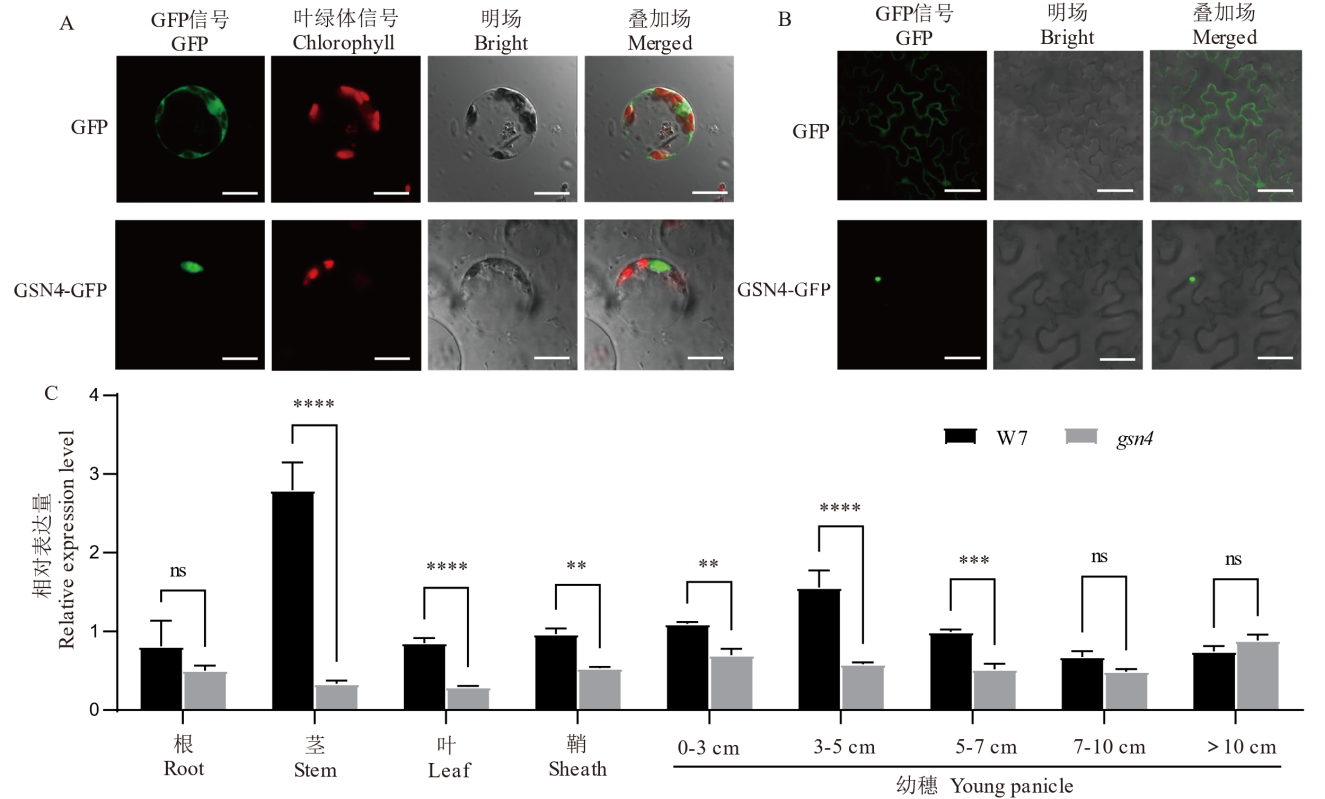
图5 GSN4的亚细胞定位和表达模式分析 A:GSN4的水稻原生质体亚细胞定位分析。绿色荧光显示GFP,红色荧光显示叶绿体自发荧光,比例尺=10 µm。B:GSN4的烟草亚细胞定位分析,绿色荧光显示GFP,比例尺=40 µm。C:GSN4在水稻组织的表达模式。数据以均值±标准差表示(n=3)。****表示 P < 0.0001 , ***表示 P < 0.001, **表示 P < 0.01,ns表示不显著。
Fig. 5. Subcellular localization and expression pattern analysis of GSN4 A, Subcellular localization analysis of GSN4 in rice protoplasts. Green fluorescence indicates GFP, and red fluorescence indicates chloroplast autofluorescence; scale bar = 10 μm. B, Subcellular localization analysis of GSN4 in tobacco. Green fluorescence indicates GFP; scale bar = 40 μm. C, Expression pattern of GSN4 in rice tissues. Data are expressed as mean ± standard deviation (n=3). ****, P<0.0001; ***, P<0.001; **, P<0.01; ns, Not significant.
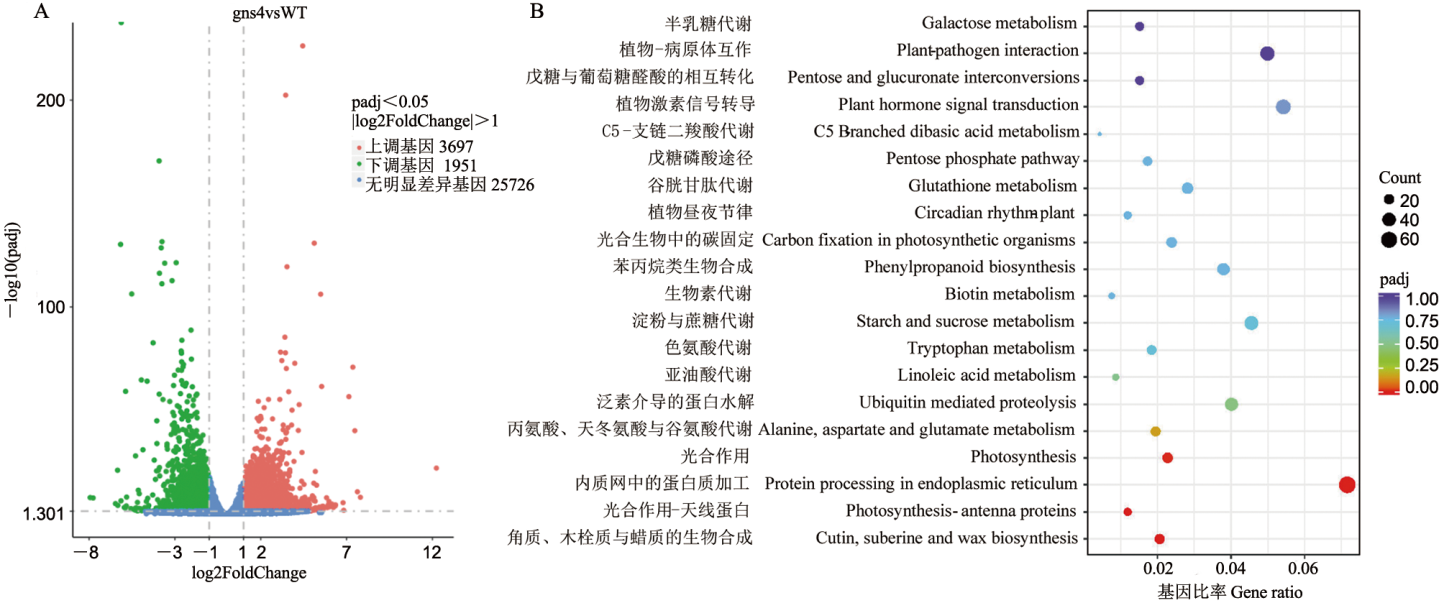
图6 野生型W7及突变体gsn4的转录组分析 A:差异表达基因火山图;B:KEGG富集分析图。
Fig. 6. RNA-seq analysis of wild-type W7 and mutant gsn4 A, Volcanogram of differentially expressed genes. B, KEGG enrichment analysis diagram.
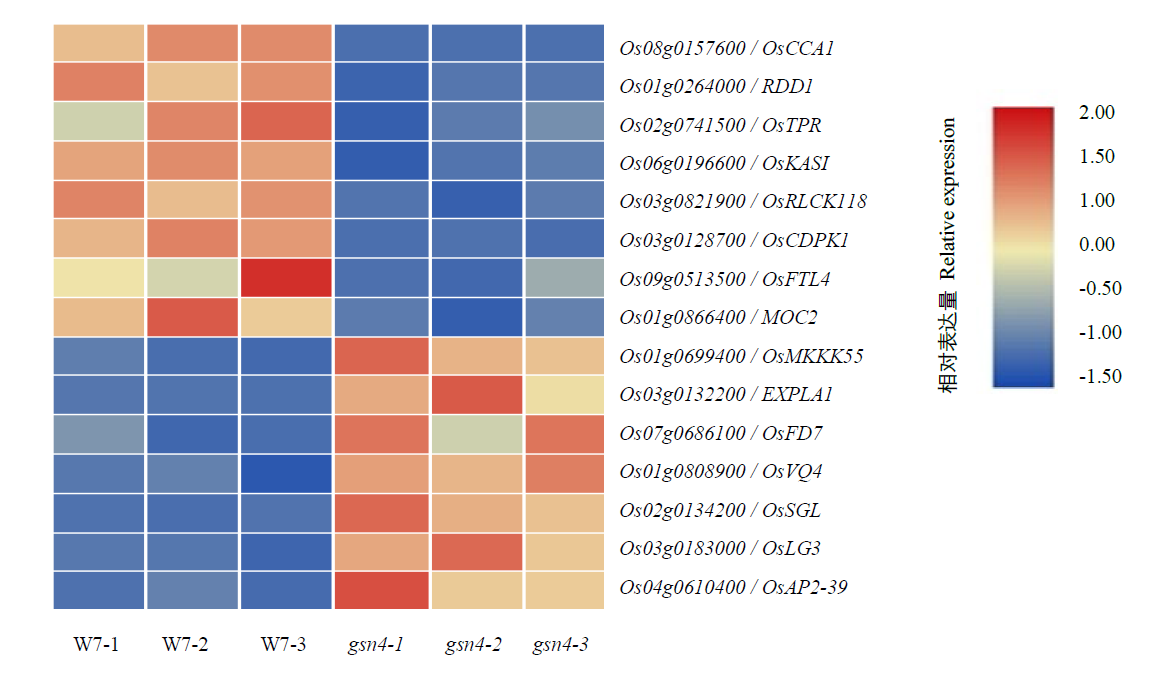
图7 野生型W7及突变体gsn4差异基因表达热图分析 图中颜色代表基因的相对表达量,红色代表高表达,蓝色代表低表达。W7为野生型,gsn4为突变体。
Fig. 7. Cluster analysis of differential gene expression patterns in wild-type W7 and mutant gsn4 The colors indicates the relative expression level of genes, with red for high expression and blue for low expression. W7 indicates the wild type and gsn4 indicates the mutant.
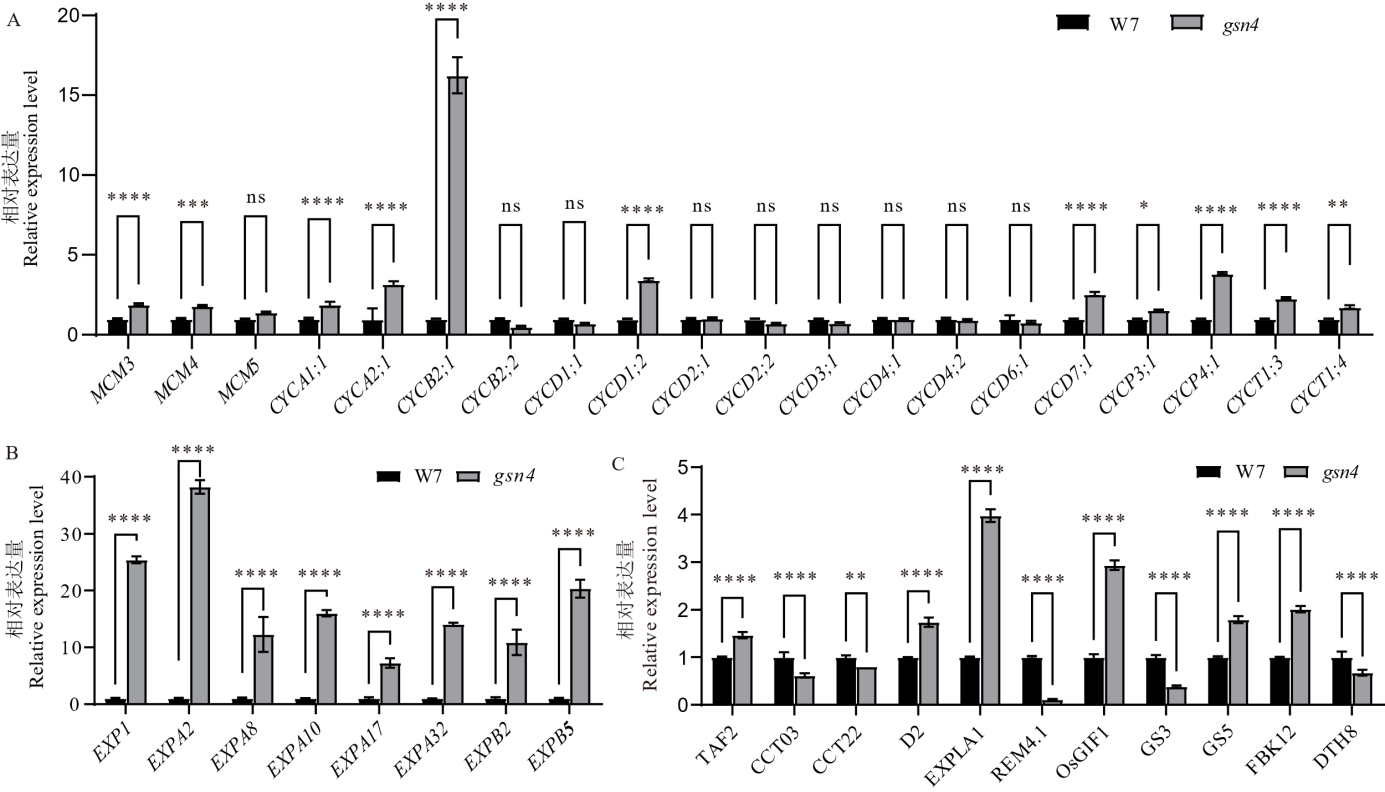
图8 W7和gsn4突变体幼穗中细胞增殖、细胞扩张以及粒形相关基因表达量分析 A:W7和gsn4幼穗中细胞增殖相关基因表达分析;B:W7和gsn4幼穗中细胞扩张相关基因表达分析;C:W7和gsn4幼穗中粒形相关基因表达分析。数据以均值±标准差表示(n=3)。****表示 P < 0.0001 , ***表示 P < 0.001, **表示 P < 0.01, *表示 P < 0.05,NS 表示不显著。
Fig. 8. Expression analysis of genes related to cell proliferation, cell expansion, and grain size in young panicles of W7 and gsn4 A, Gene expression analysis of cell proliferation-related genes in young panicles of W7 and gsn4; B, Gene expression analysis of cell expansion-related genes in young panicles of W7 and gsn4; C, Grain size-related gene expression analysis in young panicles of W7 and gsn4. Data are expressed as mean ± standard deviation (n=3). ****, P<0.0001; ***, P<0.001; **, P<0.01; *, P<0.05; NS, not significant.
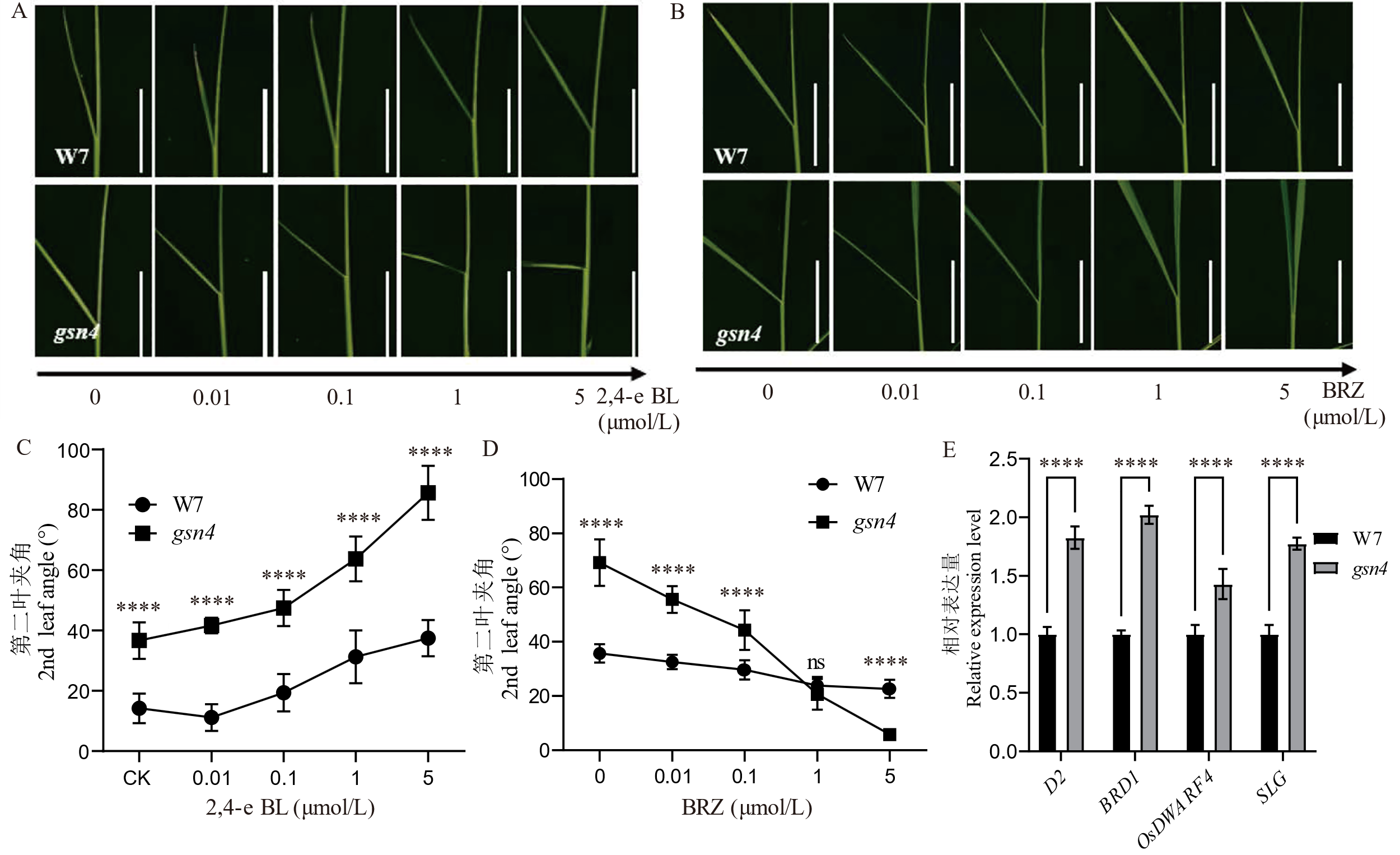
图9 野生型W7和突变体gsn4对油菜素内酯的敏感性及BR合成相关基因表达分析 A~B:在不同浓度表油菜素内酯(2,4-e BL)及油菜素唑(BRZ)的处理下,野生型W7和突变体gsn4第二片叶的叶夹角变化图,标尺为1 cm。C~D:叶夹角变化统计学分析。数据以均值±标准差表示(n=10)。E:BR生物合成基因的表达量。数据以均值±标准差表示(n=3)。****表示 P < 0.0001,ns 表示不显著。
Fig. 9. Brassinosteroid sensitivity and expression analysis of BR biosynthetic-related genes in wild-type W7 and mutant gsn4. A-B, Scans of leaf angle changes in the second leaf of wild-type W7 and mutant gsn4 under different concentrations of 2,4-e BL and BRZ treatment, Bar=1 cm. C-D, Statistical analysis of leaf angle change. Data are expressed as mean ± standard deviation (n=10). E, Expression of BR biosynthetic gene. Data are expressed as mean ± standard deviation (n=3). ****, P<0.0001; ns, Not significant.
| 位置 Location | 27551959 | 27552410 | 27552420 | 27554431 | 27554638 | 27555074 | 27555189 | 27555943 | 27556520 | 27556903 | 27557628 |
|---|---|---|---|---|---|---|---|---|---|---|---|
| SNP | G/A | C/A | C/T | A/G | C/A | A/G | A/G | T/C | G/A | A/T | G/A |
| Hap1 | G | C | C | A | C | A | A | T | G | A | G |
| Hap2 | A | A | T | G | A | G | G | C | A | A | A |
| Hap3 | G | A | C | G | C | G | G | C | A | T | G |
表1 GSN4基因Hap1-Hap3的核心多态性位点基因型
Table 1. Genotypes of core polymorphic sites of Hap1-Hap3 in GSN4
| 位置 Location | 27551959 | 27552410 | 27552420 | 27554431 | 27554638 | 27555074 | 27555189 | 27555943 | 27556520 | 27556903 | 27557628 |
|---|---|---|---|---|---|---|---|---|---|---|---|
| SNP | G/A | C/A | C/T | A/G | C/A | A/G | A/G | T/C | G/A | A/T | G/A |
| Hap1 | G | C | C | A | C | A | A | T | G | A | G |
| Hap2 | A | A | T | G | A | G | G | C | A | A | A |
| Hap3 | G | A | C | G | C | G | G | C | A | T | G |
| 单倍型 Haplotype | 亚群 Subgroup | 粒长 Grain length(mm) | 粒宽 Grain width(mm) | 千粒重 1000-grain weight(g) |
|---|---|---|---|---|
| Hap1 | XI: 245;admix: 40;Aus: 43;GJ: 778;Bas: 61;na: 1 | 8.566 | 3.178 | 26.032 |
| Hap2 | XI: 880;admix: 14;Aus: 1 | 8.597 | 2.893 | 24.688 |
| Hap3 | XI: 415;admix: 14;Aus: 138;GJ: 1;Bas: 2 | 8.654 | 2.905 | 24.231 |
表2 GSN4基因Hap1-Hap3的亚群分布及粒形性状
Table 2. Subgroup distribution and grain traits of Hap1-Hap3 in GSN4
| 单倍型 Haplotype | 亚群 Subgroup | 粒长 Grain length(mm) | 粒宽 Grain width(mm) | 千粒重 1000-grain weight(g) |
|---|---|---|---|---|
| Hap1 | XI: 245;admix: 40;Aus: 43;GJ: 778;Bas: 61;na: 1 | 8.566 | 3.178 | 26.032 |
| Hap2 | XI: 880;admix: 14;Aus: 1 | 8.597 | 2.893 | 24.688 |
| Hap3 | XI: 415;admix: 14;Aus: 138;GJ: 1;Bas: 2 | 8.654 | 2.905 | 24.231 |
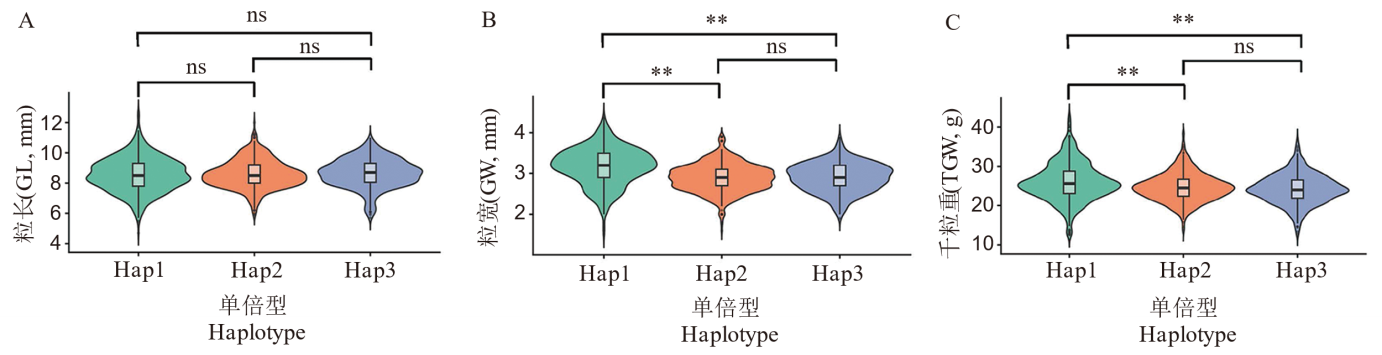
图10 GSN4的优势单倍型的粒形性状分布 Hap1-Hap3 单倍型对应粒长(GL)、粒宽(GW)、千粒重(TGW)的小提琴图,图中箱线代表四分位数,小提琴轮廓反映表型分布密度。
Fig. 10. Grain trait distribution of dominant haplotypes of GSN4 Violin plots of grain length (GL), grain width (GW), and thousand-grain weight (TGW) corresponding to Hap1-Hap3, respectively. The boxplot in the figure represents quartiles, and the violin outline reflects the phenotypic distribution density.
| [1] | Ren D Y, Ding C Q, Qian Q. Molecular bases of rice grain size and quality for optimized productivity[J]. Science Bulletin, 2023, 68(3): 314-350. |
| [2] | Zhou C L, Lin Q B, Ren Y L, Lan J, Miao R, Feng M, Wang X, Liu X, Zhang S Z, Pan T, Wang J C, Luo S, Qian J S, Luo W F, Mou C L, Nguyen T, Cheng Z J, Zhang X, Lei C L, Zhu S S, Guo X P, Wang J, Zhao Z C, Liu S J, Jiang L, Wan J M. A CYP78As-small grain4-coat protein complex Ⅱ pathway promotes grain size in rice[J]. The Plant Cell, 2023, 35(12): 4325-4346. |
| [3] | Song X J, Huang W, Shi M, Zhu M Z, Lin H X. A QTL for rice grain width and weight encodes a previously unknown RING-type E3 ubiquitin ligase[J]. Nature Genetics, 2007, 39(5): 623-630. |
| [4] | Hao J Q, Wang D K, Wu Y B, Huang K, Duan P G, Li N, Xu R, Zeng D L, Dong G J, Zhang B L, Zhang L M, Inzé D, Qian Q, Li Y H. The GW2-WG1-OsbZIP47 pathway controls grain size and weight in rice[J]. Molecular Plant, 2021, 14(8): 1266-1280. |
| [5] | Li J, Zhang B L, Duan P G, Yan L, Yu H Y, Zhang L M, Li N, Zheng L Y, Chai T Y, Xu R, Li Y H. An endoplasmic reticulum-associated degradation-related E2-E3 enzyme pair controls grain size and weight through the brassinosteroid signaling pathway in rice[J]. The Plant Cell, 2023, 35(3): 1076-1091. |
| [6] | Sun X X, Xie Y H, Xu K Z, Li J X. Regulatory networks of the F-box protein FBX206 and OVATE family proteins modulate brassinosteroid biosynthesis to regulate grain size and yield in rice[J]. Journal of Experimental Botany, 2024, 75(3): 789-801. |
| [7] | Tao Y J, Miao J, Wang J, Li W Q, Xu Y, Wang F Q, Jiang Y J, Chen Z H, Fan F J, Xu M B, Zhou Y, Liang G H, Yang J. RGG1, involved in the cytokinin regulatory pathway, controls grain size in rice[J]. Rice, 2020, 13(1): 76. |
| [8] | Miao J, Yang Z F, Zhang D P, Wang Y Z, Xu M B, Zhou L H, Wang J, Wu S J, Yao Y L, Du X, Gu F F, Gong Z Y, Gu M H, Liang G H, Zhou Y. Mutation of RGG2, which encodes a type B heterotrimeric G protein γ subunit, increases grain size and yield production in rice[J]. Plant Biotechnology Journal, 2019, 17(3): 650-664. |
| [9] | Sun S Y, Wang L, Mao H L, Shao L, Li X H, Xiao J H, Ouyang Y D, Zhang Q F. A G-protein pathway determines grain size in rice[J]. Nature Communications, 2018, 9: 851. |
| [10] | Xu R, Duan P G, Yu H Y, Zhou Z K, Zhang B L, Wang R C, Li J, Zhang G Z, Zhuang S S, Lyu J, Li N, Chai T Y, Tian Z X, Yao S G, Li Y H. Control of grain size and weight by the OsMKKK10-OsMKK4-OsMAPK6 signaling pathway in rice[J]. Molecular Plant, 2018, 11(6): 860-873. |
| [11] | Zhang G X, Liu Y Q, Xie Q J, Tong H N, Chu C C. Crosstalk between brassinosteroid signaling and variable nutrient environments[J]. Science China Life Sciences, 2023, 66(6): 1231-1244. |
| [12] | Xiong M, Feng G N, Gao Q, Zhang C Q, Li Q F, Liu Q Q. Brassinosteroid regulation in rice seed biology[J]. Seed Biology, 2022, 1(1): 1-9. |
| [13] | Hong Z, Ueguchi-Tanaka M, Shimizu-Sato S, Inukai Y, Fujioka S, Shimada Y, Takatsuto S, Agetsuma M, Yoshida S, Watanabe Y, Uozu S, Kitano H, Ashikari M, Matsuoka M. Loss-of-function of a rice brassinosteroid biosynthetic enzyme, C-6 oxidase, prevents the organized arrangement and polar elongation of cells in the leaves and stem[J]. The Plant Journal, 2002, 32(4): 495-508. |
| [14] | Hong Z, Ueguchi-Tanaka M, Umemura K, Uozu S, Fujioka S, Takatsuto S, Yoshida S, Ashikari M, Kitano H, Matsuoka M. A rice brassinosteroid-deficient mutant, ebisu dwarf (d2), is caused by a loss of function of a new member of cytochrome P450[J]. The Plant Cell, 2003, 15(12): 2900-2910. |
| [15] | Zhou Y, Tao Y J, Zhu J Y, Miao J, Liu J, Liu Y H, Yi C D, Yang Z F, Gong Z Y, Liang G H. GNS4, a novel allele of DWARF11, regulates grain number and grain size in a high-yield rice variety[J]. Rice, 2017, 10(1): 34. |
| [16] | Liu D P, Yu Z K, Zhang G X, Yin W C, Li L L, Niu M, Meng W J, Zhang X X, Dong N N, Liu J H, Yang Y Z, Wang S M, Chu C C, Tong H N. Diversification of plant agronomic traits by genome editing of brassinosteroid signaling family genes in rice[J]. Plant Physiology, 2021, 187(4): 2563-2576. |
| [17] | Qiu R H, Yang J, Hou J Q, Yao P, Xiao H Z, Wu Y Q, Tu D Y, Ye S Q, Zhao X, Ma X C, Zhao Y T, Chen T Y, Li L J. Brassinosteroid signaling mediated by the OsIAA7-OsGSK2-OsBZR1 module regulates seed size in rice[J]. The Plant Cell, 2025, 37(7): koaf165. |
| [18] | Yamamuro C, Ihara Y, Wu X, Noguchi T, Fujioka S, Takatsuto S, Ashikari M, Kitano H, Matsuoka M. Loss of function of a rice brassinosteroid insensitive1 homolog prevents internode elongation and bending of the Lamina joint[J]. The Plant Cell, 2000, 12(9): 1591. |
| [19] | Li D, Wang L, Wang M, Xu Y Y, Luo W, Liu Y J, Xu Z H, Li J, Chong K. Engineering OsBAK1 gene as a molecular tool to improve rice architecture for high yield[J]. Plant Biotechnology Journal, 2009, 7(8): 791-806. |
| [20] | Tong H N, Liu L C, Jin Y, Du L, Yin Y H, Qian Q, Zhu L H, Chu C C. DWARF AND LOW-TILLERING acts as a direct downstream target of a GSK3/SHAGGY-like kinase to mediate brassinosteroid responses in rice[J]. The Plant Cell, 2012, 24(6): 2562-2577. |
| [21] | Zhang B W, Wang X L, Zhao Z Y, Wang R J, Huang X H, Zhu Y L, Yuan L, Wang Y C, Xu X D, Burlingame A L, Gao Y J, Sun Y, Tang W Q. OsBRI1 activates BR signaling by preventing binding between the TPR and kinase domains of OsBSK3 via phosphorylation[J]. Plant Physiology, 2016, 170(2): 1149-1161. |
| [22] | Hu J, Wang Y X, Fang Y X, Zeng L J, Xu J, Yu H P, Shi Z Y, Pan J J, Zhang D, Kang S J, Zhu L, Dong G J, Guo L B, Zeng D L, Zhang G H, Xie L H, Xiong G S, Li J Y, Qian Q. A rare allele of GS2 enhances grain size and grain yield in rice[J]. Molecular Plant, 2015, 8(10): 1455-1465. |
| [23] | Zhao D S, Li Q F, Zhang C Q, Zhang C, Yang Q Q, Pan L X, Ren X Y, Lu J, Gu M H, Liu Q Q. GS9 acts as a transcriptional activator to regulate rice grain shape and appearance quality[J]. Nature Communications, 2018, 9: 1240. |
| [24] | Tian X J, He M L, Mei E Y, Zhang B W, Tang J Q, Xu M, Liu J L, Li X F, Wang Z Y, Tang W Q, Guan Q J, Bu Q Y. WRKY53 integrates classic brassinosteroid signaling and the mitogen-activated protein kinase pathway to regulate rice architecture and seed size[J]. The Plant Cell, 2021, 33(8): 2753-2775. |
| [25] | Huang Y S, Dong H, Mou C L, Wang P, Hao Q X, Zhang M, Wu H M, Zhang F L, Ma T F, Miao R, Fu K, Chen Y P, Zhu Z Y, Chen C, Tong Q K, Wang Z R, Zhou S R, Liu X, Liu S J, Tian Y L, Jiang L, Wan J M. Ribonuclease H-like gene SMALL GRAIN2 regulates grain size in rice through brassinosteroid signaling pathway[J]. Journal of Integrative Plant Biology, 2022, 64(10): 1883-1900. |
| [26] | Zhang X Q, Sun J, Cao X F, Song X W. Epigenetic mutation of RAV6 affects leaf angle and seed size in rice[J]. Plant Physiology, 2015, 169(3): 2118-2128. |
| [27] | Jiang Y H, Bao L, Jeong S Y, Kim S K, Xu C G, Li X H, Zhang Q F. XIAO is involved in the control of organ size by contributing to the regulation of signaling and homeostasis of brassinosteroids and cell cycling in rice[J]. The Plant Journal, 2012, 70(3): 398-408. |
| [28] | Feng Z M, Wu C Y, Wang C M, Roh J, Zhang L, Chen J, Zhang S Z, Zhang H, Yang C Y, Hu J L, You X M, Liu X, Yang X M, Guo X P, Zhang X, Wu F Q, Terzaghi W, Kim S K, Jiang L, Wan J M. SLG controls grain size and leaf angle by modulating brassinosteroid homeostasis in rice[J]. Journal of Experimental Botany, 2016, 67(14): 4241-4253. |
| [29] | Zhang Q L, Wu R H, Hong T, Wang D C, Li Q L, Wu J Y, Zhang H, Zhou K, Yang H X, Zhang T, Liu J X, Wang N, Ling Y H, Yang Z L, He G H, Zhao F M. Natural variation in the promoter of qRBG1/OsBZR5 underlies enhanced rice yield[J]. Nature Communications, 2024, 15: 8565. |
| [30] | Guo J, Zhang H S, Fan M Y, Xiao Y K, Zhu Y S, Chen C P, Shu H, Wei M M, Luo Y T, Yang X R, Liu Y, Xu J Z, Zhao K, Wang S, Yang B, Sun C H, Deng X J, Wang P R. OsBIR3 maintains the homeostasis of OsBRI1, OsREM4.1, and Brd2 protein levels in brassinosteroid pathways in rice[J]. Plant Biotechnology Journal, 2025, 23(8): 3024-3040. |
| [31] | Sun F L, Zhang W P, Xiong G S, Yan M X, Qian Q, Li J Y, Wang Y H. Identification and functional analysis of the MOC1 interacting protein 1[J]. Journal of Genetics and Genomics, 2010, 37(1): 69-77. |
| [32] | Xu Z T, Li E Z, Xue G, Zhang C, Yang Y C, Ding Y. OsHUB2 inhibits function of OsTrx1 in heading date in rice[J]. The Plant Journal, 2022, 110(6): 1670-1680. |
| [33] | Cao H, Li X Y, Wang Z, Ding M, Sun Y Z, Dong F Q, Chen F Y, Liu L A, Doughty J, Li Y, Liu Y X. Histone H2B monoubiquitination mediated by Histone Monoubiquitination1 and Histone Monoubiquitination2 is involved in anther development by regulating tapetum degradation-related genes in rice[J]. Plant Physiology, 2015, 168(4): 1389-1405. |
| [34] | Li N, Xu R, Duan P G, Li Y H. Control of grain size in rice[J]. Plant Reproduction, 2018, 31(3): 237-251. |
| [35] | Zheng N, Shabek N. Ubiquitin ligases: Structure, function, and regulation[J]. Annual Review of Biochemistry, 2017, 86: 129-157. |
| [36] | Choi B S, Kim Y J, Markkandan K, Koo Y J, Song J T, Seo H S. GW2 functions as an E3 ubiquitin ligase for rice expansin-like 1[J]. International Journal of Molecular Sciences, 2018, 19(7): 1904. |
| [37] | Xie Z Z, Sun Y, Zhan C H, Qu C F, Jin N, Gu X Y, Huang J L. The E3 ligase OsPUB33 controls rice grain size and weight by regulating the OsNAC120-BG1 module[J]. The Plant Cell, 2024, 37: koae297. |
| [38] | Wu Y Z, Fu Y C, Zhao S S, Gu P, Zhu Z F, Sun C Q, Tan L B. CLUSTERED PRIMARY BRANCH 1, a new allele of DWARF11, controls panicle architecture and seed size in rice[J]. Plant Biotechnology Journal, 2016, 14(1): 377-386. |
| [39] | Zou T, Zhang K X, Zhang J, Liu S J, Liang J, Liu J X, Zhu J, Liang Y Y, Wang S Q, Deng Q M, Liu H N, Jin J H, Li P, Li S C. DWARF AND LOW-TILLERING 2 functions in brassinosteroid signaling and controls plant architecture and grain size in rice[J]. The Plant Journal, 2023, 116(6): 1766-1783. |
| [40] | Xie Y H, Fan Z P, Liang X Y, Teng K C, Huang Z J, Huang M Y, Zhao H, Xu K Z, Li J X. OsPUB9 modulates leaf angle and grain size through the brassinosteroid signaling pathway in rice[J]. The Plant Journal, 2025, 121(3): e17230. |
| [1] | 童毅, 钱前, 高振宇. 水稻分子设计育种研究进展[J]. 中国水稻科学, 2026, 40(5): 569-583. |
| [2] | 冯莆淋, 杨绮文, 吴佳益, 范鸣谦, 程艳双, 邱忠华, 郭然, 陈温福, 王嘉宇. 水稻颖壳发育基因AGL1的图位克隆与功能分析[J]. 中国水稻科学, 2026, 40(5): 607-617. |
| [3] | 于冰洁, 王浩宇, 葛语桐, 崔格格, 张海鹏, 魏海燕, 张洪程, 许方甫. 油菜秸秆还田下增苗减氮对中熟晚粳稻产量和品质的影响[J]. 中国水稻科学, 2026, 40(5): 618-631. |
| [4] | 杨昌南, 何子欣, 谈亚文, 张学智, 张业诚, 田浩然, 危常州, 张新疆. 滴灌配施不同形态氮肥管理对水稻根际氮转化过程及产量形成的影响[J]. 中国水稻科学, 2026, 40(5): 632-647. |
| [5] | 王新雅, 何卓婷, 李潇, 尤赛雅, 朱练峰, 孔亚丽, 朱春权, 田文昊, 张均华, 金千瑜, 曹小闯. 秸秆分层还田耦合腐解菌剂通过调控土壤有机碳转化和微生物群落结构提高水稻产量[J]. 中国水稻科学, 2026, 40(5): 648-662. |
| [6] | 许永炜, 刘淑华, 冯泽霖, 罗举, 倪兆新, 杨保军, 姚青, 李阿根. 基于多模态融合的水稻生育期智能识别方法[J]. 中国水稻科学, 2026, 40(5): 663-678. |
| [7] | 冯爱卿, 张亚博, 周继勇, 苏菁, 封金奇, 陈凯玲, 陈炳, 梁美玲, 朱小源, 汪聪颖, 陈深. 10个抗白叶枯病基因在华南水稻品种中的分布研究[J]. 中国水稻科学, 2026, 40(5): 679-695. |
| [8] | 陈春晓, 付琳丽, 张微, 卜庆云, 田晓杰. 水稻MAPK家族基因功能研究进展[J]. 中国水稻科学, 2026, 40(4): 425-435. |
| [9] | 付瑶, 李娜, 徐静茹, 覃奕琰, 程笑然, 孙浩峰, 张琪, 崔志波, 杨新宇, 赵明辉. OsST2调控水稻苗期耐盐性的功能研究[J]. 中国水稻科学, 2026, 40(4): 436-446. |
| [10] | 邱一洁, 齐飞扬, 杜何为, 黄敏, 李曼菲. 水稻叶脉基因OsLVD1的鉴定及功能分析[J]. 中国水稻科学, 2026, 40(4): 447-459. |
| [11] | 朱骏, 杨延铭, 杨仲南. 水稻光温敏核不育系的诱变创制[J]. 中国水稻科学, 2026, 40(4): 460-468. |
| [12] | 廖萍, 刘若彤, 孟轶, 翁文安, 都晗萌, 李骏, 高辉, 张洪程. 一次性基施控释掺混肥对水稻产量和倒伏性状的影响[J]. 中国水稻科学, 2026, 40(4): 469-475. |
| [13] | 陈川燕, 宋志文, 李玉祥, 郝全有, 朱岚. Fe-Mg纳米颗粒引发对盐胁迫下水稻种子萌发及幼苗生长的影响[J]. 中国水稻科学, 2026, 40(4): 476-486. |
| [14] | 钟晓媛, 王众, 陈雷, 张晓丽, 黄严, 朱德峰, 王亚梁, 覃勇, 高国庆, 张隆葵, 唐茂艳, 梁天锋. 精准条播育秧对广西机插水稻栽插质量、干物质生产及产量的影响[J]. 中国水稻科学, 2026, 40(4): 487-501. |
| [15] | 赵春芳, 罗磊, 赵庆勇, 庄丽华, 管菊, 陈涛, 朱镇, 张亚东, 王才林. 节水灌溉对优良食味粳稻产量形成及根系形态的影响[J]. 中国水稻科学, 2026, 40(4): 519-530. |
| 阅读次数 | ||||||
|
全文 |
|
|||||
|
摘要 |
|
|||||
